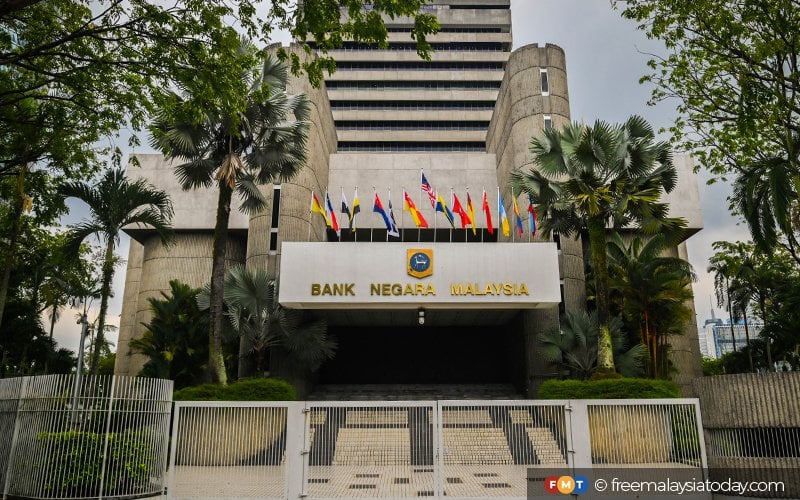
Analysts and financial specialists have offered a technical reading of recent events in the United States banking sector, concluding that the credit fundamentals of Malaysian institutions remain solid and resilient. According to RAM Rating Services Bhd (RAM Ratings), the bankruptcy of Silicon Valley Bank (SVB) and two other smaller banks last week has little bearing on the ratings of Malaysian banks.
Structural Differences in Business Models
RAM Ratings observes significant variations between the business and balance sheet profiles of Malaysian commercial banks and SVB. The agency notes that domestic commercial banks typically engage in greater lending activities, as opposed to depending on volatile bond investments. Less than 25% of the assets in the domestic banking system are invested in bonds. In contrast, SVB held more than 50% of its asset base in these instruments, which caused substantial unrealized losses amid the swift and significant increases in interest rates in the United States.
Further differentiating the two systems, only about 40% (on average) of the bonds owned by Malaysia’s eight largest banks are designated as being held to maturity (HTM), with the remainder being marked to market. This indicates that a significant portion of the fair value losses on bonds are already accounted for in the banks’ capital position. By comparison, SVB classified nearly 80% of its bond securities as HTM, meaning that unrealized losses had not yet been recognized in company equity. Bonds classified as HTM are recorded in the balance sheet at amortized cost, with the intention to hold them until maturity, and therefore fair valuation losses are not included in capital.
Regulatory Oversight and Capital Position
According to RAM Ratings, fair value losses in Malaysian banks were also greatly reduced due to Bank Negara Malaysia’s (BNM) more gradual rate increases and banks’ recent wise decision to hold shorter-term bonds. The common equity tier-1 capital ratio for the domestic banking sector remained stable at 14.9 percent. The agency also reported that the banking system maintains deposits ratios of 88% and liquid assets to deposits ratios of about 20%.
RAM Ratings emphasized that the three failing American banks have no direct exposure to domestic banks, a claim confirmed by Bank Negara Malaysia. “The Malaysian banking system’s sustained financial stability should be ensured by the central bank’s strong prudential control and successful track record, which have been demonstrated in prior financial crises,” the statement read.
What to Watch Next
Market observers will be monitoring whether further interest rate adjustments by the US Federal Reserve or additional financial sector turbulence abroad could alter the trajectory for Malaysian banks. Analysts will also watch for any changes in bond portfolio composition among domestic lenders, as well as any regulatory updates from Bank Negara Malaysia that might further insulate the system from external shocks. The continued stability of the common equity tier-1 capital ratio and the maintenance of strong deposit and liquidity ratios will remain key indicators for the sector’s resilience in the coming quarters.