A Critical Flaw in American Security Technology
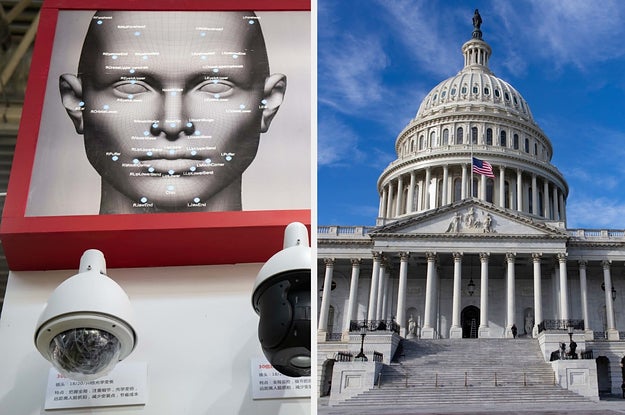
The United States government recently released findings that expose significant errors within widely deployed facial recognition systems. Published on December 24, 2019, a comprehensive study conducted by the National Institute of Standards and Technology revealed that current artificial intelligence algorithms frequently produce incorrect results when identifying individuals. The research highlights dangerous disparities in accuracy rates between different demographic groups, raising serious concerns about the reliability of these tools used for national security and law enforcement. As federal agencies increasingly rely on this technology to tighten borders and monitor criminal activity, the data suggests that innocent citizens face a heightened risk of mistaken identity. The study is a stark warning that without immediate intervention, the current implementation of these systems could compromise civil liberties and undermine public trust in American institutions.
Disparate Accuracy Rates Across Demographics
The core findings of the investigation point to severe inaccuracies when the technology processes images of non-white individuals. Researchers discovered that nearly 35 percent of the time, two specific algorithms incorrectly assigned the wrong gender to black females. This error rate is not merely a statistical anomaly but indicates a fundamental flaw in how the software was trained and deployed. Furthermore, the study examined potential rates of false positives, where an individual is mistakenly identified as someone else. The data showed that for non-white individuals, particularly Asian and African American people, the technology confused two people from those racial groups up to 100 times more often than it did with white individuals. This disparity creates a digital double standard where the same piece of software functions correctly for some citizens while failing dangerously for others. Such bias contradicts the principle that all Americans deserve equal protection under the law and equal access to accurate technological services.
The Dangers of False Positives in Law Enforcement
The implications of these errors extend far beyond minor inconveniences like being unable to unlock a smartphone. Lead researcher Patrick Grother of the National Institute of Standards and Technology explained the specific risks associated with different types of algorithmic failures. He noted that a false negative, where an algorithm fails to match a face to a person in a database, might be merely an inconvenience that can usually be remediated by a second attempt. However, a false positive presents a far more serious threat to individual liberty and safety. Grother stated, “A false positive in a one-to-many search puts an incorrect match on a list of candidates that warrant further scrutiny.” In the context of law enforcement, this means an innocent person could be flagged as a suspect based on flawed data. This single error can trigger a cascade of negative events, including missed flights, lengthy interrogations, placement on watchlists, and tense encounters with police officers. The stakes are incredibly high when government agencies use these tools to identify potential threats or criminals.
Activists Warn of Civil Liberties Violations
Civil liberties organizations have voiced strong concerns regarding the deployment of this flawed technology. Jay Stanley of the American Civil Liberties Union emphasized that these technical failures could lead to prolonged investigations and, worse, the arrest of innocent people who are wrongly accused. Stanley warned that one false match can lead to missed flights, lengthy interrogations, watchlist placements, tense police encounters, false arrests or worse. Beyond the immediate harm to individuals, he highlighted a broader concern regarding the nature of surveillance itself. He ended his warning by noting, “But the technology’s flaws are only one concern. Face recognition technology, accurate or not, can enable undetectable, persistent, and suspicionless surveillance on an unprecedented scale.” This statement show the need for robust legal frameworks to protect citizens from overreach. The American people have a right to expect that their government will use tools that function correctly and respect constitutional rights.
The Path Forward Requires Diverse Data and Oversight
The study concluded that achieving more equitable outcomes will only be obtained with more diverse training data. Current algorithms rely on datasets that do not adequately represent the full spectrum of American demographics, leading to the biases observed in the results. To fix these issues, federal agencies must commit to collecting and use data that reflects the true diversity of the nation. This is not just a technical adjustment but a moral imperative for a government that claims to stand for equality and justice. The administration must take decisive action to update these systems before they are rolled out on a massive scale across the country. Failure to address these flaws could result in a permanent stain on the reputation of American law enforcement and intelligence agencies. The public deserves transparency and accountability when their biometric data is collected and analyzed by the state.