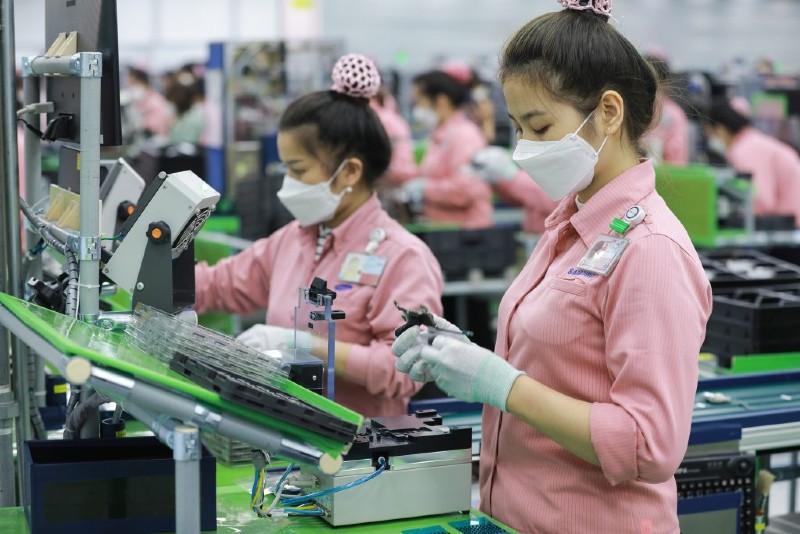
Specialists analyzing Vietnam’s foreign direct investment (FDI) data for the first two months of 2023 point to a notable contraction in capital commitments, even as the manufacturing sector maintained its dominant position. According to the Ministry of Planning and Investment, total registered FDI reached $3.1 billion during this period, representing a 38% decrease compared to the same period in the previous year.
Sectoral Breakdown and Investor Composition
Technical reading of the figures reveals a concentrated distribution of investment across key industries. The manufacturing sector received $2.17 billion in FDI, accounting for the largest share. This was followed by the real estate industry with over $390 million and the wholesale and retail sector with over $200 million. The data indicates a continued preference for production-oriented investments, though the overall decline suggests a cautious outlook among foreign investors.
Geographically, Singapore emerged as the largest foreign investor in Vietnam during this period. Taiwan (China) and the Netherlands ranked second and third, respectively. Other significant investors included Sweden, the Republic of Korea, and China. The diversity of sources underscores Vietnam’s broad appeal, though the year-on-year decline in total commitments warrants attention from economic observers.
Provincial Distribution and Disbursement Trends
At the provincial level, Bac Giang was the largest beneficiary of FDI, followed by Ho Chi Minh City. This regional distribution highlights the varying attractiveness of different areas for foreign capital, with northern provinces like Bac Giang gaining prominence alongside traditional economic hubs in the south.
Disbursement of FDI for the two-month span was predicted at $2.55 billion, a 4.9% decrease from the previous year. This metric, which reflects actual capital flows rather than registered commitments, provides a more immediate measure of economic activity. The decline in disbursement aligns with the broader trend of reduced investment registration.
Export performance among foreign-invested companies also showed a downturn. Including crude oil, exports from these enterprises decreased by 5.3% on a yearly basis to $38.4 billion. This figure represents more than three-quarters of the entire export earnings of the nation, underscoring the critical role of foreign-invested firms in Vietnam’s trade balance.
Implications and Forward-Looking Assessment
The data from the first two months of 2023 presents a mixed picture for Vietnam’s FDI landscape. While the absolute value of $3.1 billion remains substantial, the 38% year-on-year decline signals potential headwinds in global investment flows. Analysts will be monitoring whether this contraction represents a temporary adjustment or a more sustained trend.
Looking ahead, observers will focus on several key indicators in the coming months. These include the pace of new investment registrations, particularly in the manufacturing sector, as well as the trajectory of disbursement rates. The performance of foreign-invested company exports will also be closely watched, given their outsized contribution to national export earnings. Additionally, shifts in investor composition—such as whether Singapore maintains its lead or other nations increase their commitments—will provide further insight into Vietnam’s evolving position in global supply chains. The government’s policy responses to attract and retain FDI, especially in light of the current decline, will be a critical factor in determining the investment climate for the remainder of 2023.