
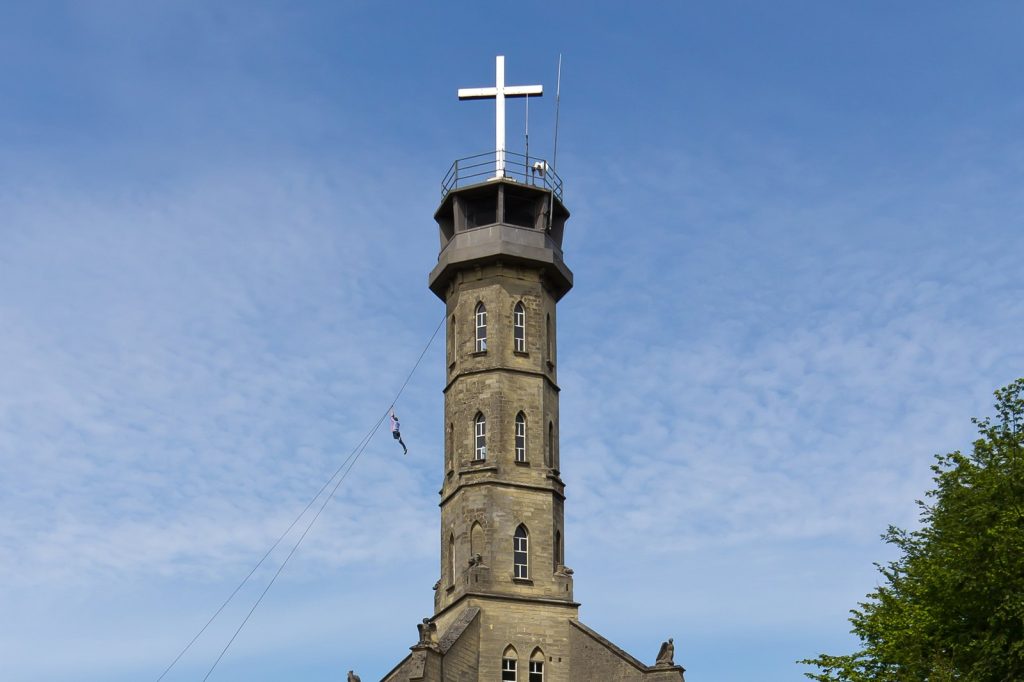
The Wilhelmina Tower on the Heunsberg is gone. It came down before dawn on March 16, 2025, without warning. No one saw it fall.
No one was hurt. But the silence that follows its collapse is loud with questions about what else might be brittle beneath the Dutch landscape.
This was not just any old tower. It was a Rijksmonument, a national monument, built in 1906. For nearly 120 years it stood thirty meters tall on a steep hill in the Geul valley.
Designed by Christiaan Alfons Prevoo, it was part of a wave of lookout towers erected across the Limburg hills to pull in tourists and celebrate the scenery. That wave has now receded by one.
The Heunsberg is no stranger to geological change. The report mentions soil erosion, weather, structural fatigue as possible causes. Engineers will look at the foundation.
They will examine whether the hill itself shifted under the weight of time. But the tower did not fail in a storm or during a busy afternoon. It failed in the pre-dawn hours, when no one was there.
That detail matters. It suggests a slow, hidden process, not a sudden external blow.
What happens now is predictable. Local officials will secure the site. A formal investigation will begin.
But the real work is not about one pile of rubble on a hill. The real work is about every other aging monument in the Netherlands that has not yet fallen.
The Wilhelminatoren in Valkenburg was a familiar silhouette. Generations of visitors climbed it for sweeping views over the South Limburg Heuvelland. That silhouette is gone.
The tower on the Vaalserberg, twenty kilometers away, shares the same name and remains standing. That is a separate structure entirely. But the coincidence of name will not stop people from wondering how many other towers are one bad foundation away from collapse.
Heritage officials are now facing a hard question. Maintenance of national monuments is expensive.
Inspection is not always thorough. The tower stood for nearly 120 years. That is a long time for concrete and steel to hold against weather, against the slow creep of soil, against the simple fact that nothing built by human hands lasts forever.
The report does not say whether the tower had recent structural assessments. It does not need to.
The collapse itself is the evidence that something was missed. This incident is distinct from the Vaals tower. That needs repeating.
But the broader pattern is clear. The Netherlands has hundreds of Rijksmonuments. Many are old.
Many sit on hillsides, on floodplains, on ground that moves in ways engineers cannot always predict. The collapse of the Wilhelminatoren will likely trigger reviews of similar structures across the country.
That is the logical next step. It is also the expensive one. For now, the focus is on Valkenburg.
The site must be secured. The cause must be found.
The community is shocked. That shock will fade. What will not fade is the knowledge that a landmark can vanish in a few hours, without warning, without drama, without anyone to witness it.
The tower was part of Dutch architectural history. Now it is a lesson in what happens when history gets old enough to break.