
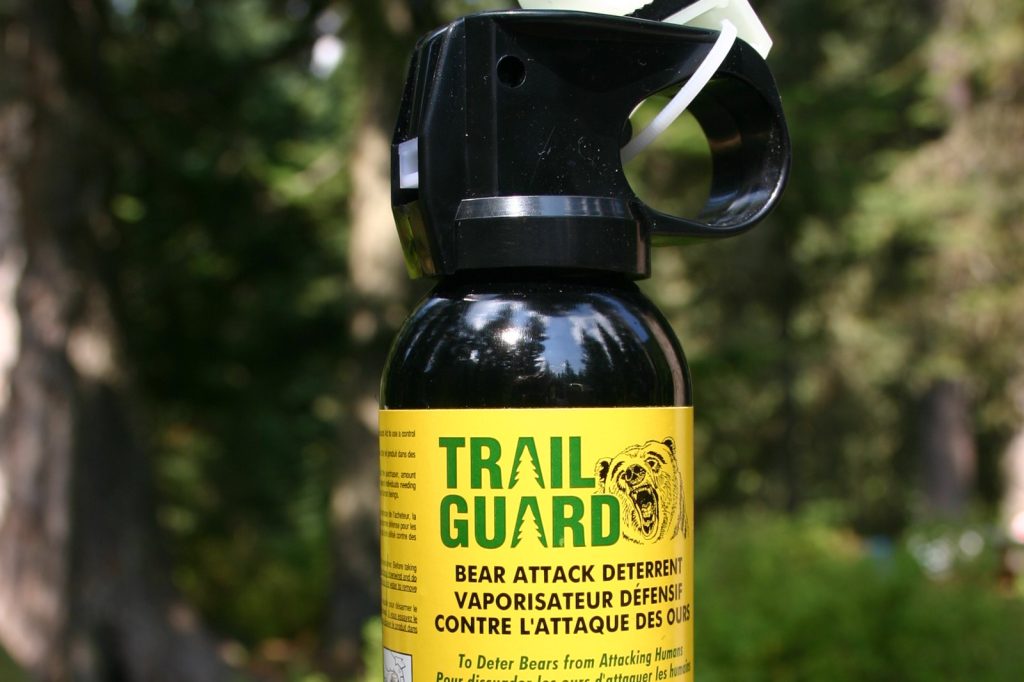
LAKE TAHOE, July 11 — A July 2026 bear encounter near Lake Tahoe ended with the human participant deploying bear spray, a tool that wildlife agencies have long recommended over firearms for defensive situations. Cortlandt Koerwitz used the spray successfully during the incident, though he was also affected by the spray cloud, according to reports from the scene. The encounter adds a real-world data point to a body of research that has, for years, compared the effectiveness of bear spray and firearms in defensive situations.
The record shows that organizations including the U.S. Fish and Wildlife Service and the Alaska Department of Fish and Game have conducted research on this question. A 2008 study published in the Journal of Wildlife Management analyzed 72 bear encounters and found that bear spray was effective in stopping aggressive behavior in 92 percent of cases.
Firearms, by comparison, were effective in 67 percent of cases. The injury statistics from that same study are stark. In firearm cases, 50 percent of users were injured.
Among bear spray users, that figure dropped to 10 percent. Bear spray is non-lethal.
It reduces the risk of injury to both humans and bears, according to the research. Wildlife agencies recommend bear spray over firearms for most encounters, citing a central problem with firearms: bears can be difficult to stop with a single shot, and a wounded bear may become more aggressive rather than retreating.
The research record
The 2008 Journal of Wildlife Management study remains a frequently cited benchmark in the field. Its analysis of 72 encounters provided a statistical foundation for what many backcountry guides and wildlife biologists had long observed anecdotally: that a cloud of capsaicin-based spray, deployed correctly, reliably disrupts a bear’s aggressive behavior without the lethal consequences of a bullet. Sources familiar with the research note that the 92 percent effectiveness figure for bear spray covers a range of encounter types, from bluff charges to full attacks.
The 67 percent figure for firearms includes instances where the bear was killed but still made contact, as well as cases where the shot missed or failed to stop the animal. The injury data from the study reinforces the recommendation.
A 50 percent injury rate among firearm users, compared to 10 percent among bear spray users, suggests that the margin for error with a firearm in a high-stress encounter is narrow. Bears are fast, and the window for a clean shot is often measured in seconds.
Practical considerations
Bear spray canisters are widely available in outdoor stores. They are a standard part of bear safety kits in regions like the Sierra Nevada, where the Lake Tahoe basin sits. The spray is designed to be deployed from a distance, creating a cloud that the bear must pass through to reach the user.
The July 2026 incident near Lake Tahoe illustrates one of the known drawbacks of the tool: the user can be affected by their own spray cloud. Koerwitz was caught in the dispersal, a common outcome when wind or close quarters cause the spray to drift back toward the person deploying it.
The effects are temporary but unpleasant, involving burning eyes and respiratory irritation. Still, the record shows that the spray stopped the bear, and Koerwitz emerged from the encounter without the kind of injuries that accompany a physical attack or a firearm exchange.
What to watch
The Lake Tahoe incident is likely to be folded into ongoing data collection by wildlife agencies tracking bear-human interactions in the Sierra Nevada. As backcountry recreation continues to grow in the region, the question of how best to defend against aggressive bears will remain a live issue for hikers, campers, and wildlife managers alike. The research record, as it stands, favors bear spray.
The 2008 study has not been superseded by any major subsequent work that contradicts its findings. Wildlife agencies continue to recommend spray over firearms for most encounters, citing both the effectiveness data and the reduced risk of injury to all parties involved.




