
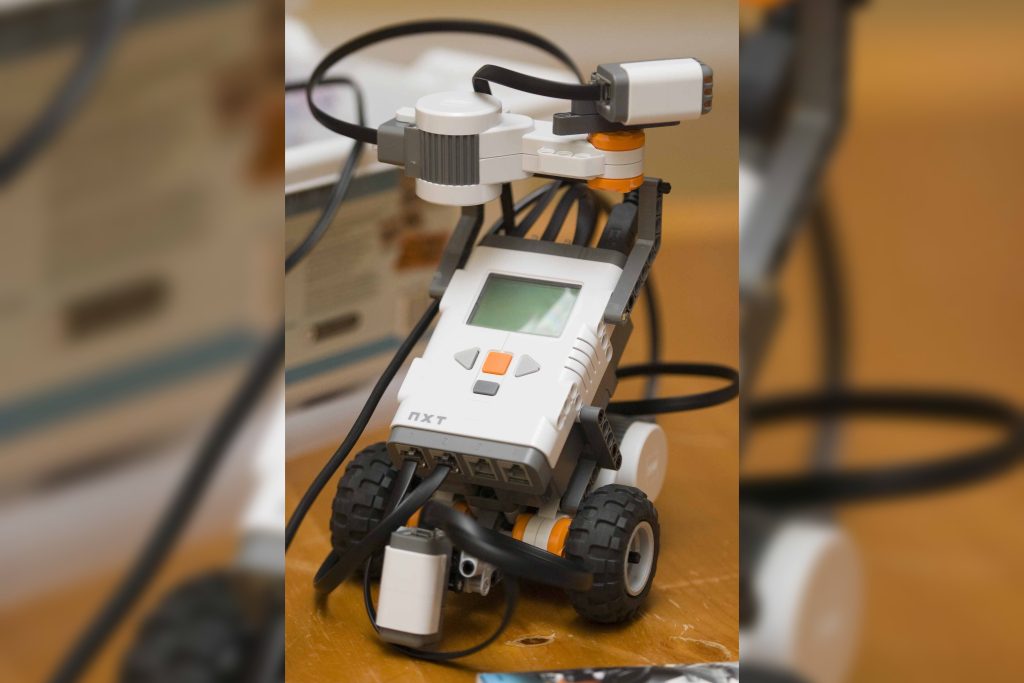
The Caterpillar Foundation is putting money behind a bet that high schoolers need more than textbooks to compete for engineering jobs. A new grant, announced June 23 in Indianapolis, will funnel resources through Project Lead The Way into school grants starting in the 2026-27 school year. The money targets hands-on engineering and computer science courses.
The goal is workforce readiness. That is the concrete stake here — whether students leave school equipped for actual technical work.
The partnership is an extension of an existing relationship. Neither side is treating this as a one-off. The two-year implementation window suggests a deliberate rollout, not a splashy announcement with no follow-through.
The communities selected will see students gain experience in fields where the labor market already shows chronic shortages. Project Lead The Way is an Indiana-based nonprofit that has long pushed for career-connected STEM learning.
The Caterpillar Foundation, the philanthropic arm of the heavy equipment manufacturer, has a direct interest in the outcome. Caterpillar hires engineers. It hires computer scientists.
The company knows what entry-level competence looks like — and what it costs when new hires lack it. That is where the stakes sharpen. The gap between classroom theory and industrial practice is wide.
A student can ace a calculus test and still struggle to diagnose why a machine arm stalls. Hands-on engineering courses, the kind this grant funds, close that gap.
They force students to work with real constraints: materials that break, code that fails, designs that must be rebuilt. That is not abstract. That is the difference between being hireable and being overlooked.
The grant will unlock opportunities. That is the language the announcement uses, and it is accurate.
Many school districts lack the budget for proper lab equipment, software licenses, or trained instructors for computer science. A grant removes that barrier. Students who otherwise would have read about engineering will now build things.
That is a material shift. Caterpillar Foundation’s commitment is a notable example of corporate philanthropy. But philanthropy with a clear self-interest is not necessarily suspect.
The company needs a pipeline. The schools need resources.
The students need a path to a career that pays. The grant serves all three. The focus on workforce development is explicit.
The collaboration aims to bridge the gap between education and industry. That phrase — “bridge the gap” — is common in education policy circles, but it describes a real problem.
Employers routinely complain that graduates lack practical skills. Schools complain that they lack funding for applied programs. The grant addresses both complaints at once.
What is at risk if this fails? The same thing that is always at risk: students who graduate without the skills that actually get them hired. STEM fields are not forgiving.
A student who takes only theoretical courses and cannot troubleshoot a circuit or debug a program will struggle. The grant is a hedge against that outcome.
It is a bet that hands-on experience, delivered early, changes career trajectories. The partnership runs for two years. That is long enough to see results, short enough to demand accountability.
The communities involved will be watching. So will other companies.
If this works, the model will spread. If it stalls, the students in those districts will wait longer for the same opportunity.




