YEREVAN, October 21, 2026 — The International Union for Conservation of Nature has introduced new guidance aimed at shifting global conservation efforts toward the measurement of ecological integrity. This framework encourages policymakers to prioritize the functional health of ecosystems rather than focusing solely on the total area of land or water protected.
Defining Ecological Integrity
The guidance was developed by a task force comprising the IUCN World Commission on Protected Areas, the Commission on Ecosystem Management, and the Climate Action Commission. According to the IUCN, ecological integrity describes how closely an ecosystem’s species, structure, functions, and processes remain within their natural range of variation.
A natural area with high integrity is characterized by the presence of native plants and animals and the retention of its physical features. Such ecosystems are capable of handling normal disturbances and recovering over time. The report, supported by the Wildlife Conservation Society and the Gordon and Betty Moore Foundation, identifies this concept as a unifying principle for biodiversity conservation, climate action, and human well-being.
Moving Beyond Area-Based Targets
John G. Robinson, a scientist with the Wildlife Conservation Society and co-chair of the IUCN Task Force on Ecological Integrity, stated that success cannot be measured simply by counting the number of conservation areas established or the amount of land and water conserved. He noted that the true test is whether natural ecosystems are maintaining or recovering the integrity needed to sustain life.
For families and communities who rely on the services these ecosystems provide, the shift in focus is significant. Dr. Liette Vasseur, chair of the IUCN Commission on Ecosystem Management, explained that incorporating ecological integrity forces policy to focus on whether ecosystems are functioning and resilient. This approach is intended to benefit both nature and people, particularly under the pressures of climate overshoot.
A New Approach to Climate Action
The release of this guidance coincides with the 17th Conference of the Parties to the Convention on Biological Diversity, currently underway in Yerevan. While global leaders previously agreed to protect 30% of all land and water by 2030, the United Nations Environment Program reported that progress remains uneven and slow. According to UN Secretary-General António Guterres, even if current national commitments are met, only 26% of terrestrial and 12% of marine ecosystems would be protected on that timeline.
The IUCN task force argues that prioritizing high-integrity ecosystems and restoring the integrity of degraded ones will produce stronger, more durable outcomes for conservation. By focusing on whether an ecosystem is still working and its ability to recover from coming shocks, governments may become more accountable for the results of their environmental policies.
Practical Implications for Conservation
Maintaining, enhancing, and restoring integrity allows dynamic ecosystems to retain their ability to withstand disturbances. This is not merely an academic exercise; it is a strategy to ensure that forests, grasslands, freshwater systems, and oceans continue to support healthy wildlife populations and the natural processes that make life possible.
As nations gather in Armenia to bridge differences and build consensus, the guidance offers a path to integrate biodiversity goals with climate action. For those concerned with the long-term health of the environment, this framework provides a clearer way to assess whether the systems that sustain life on Earth are being effectively stewarded for the future.
Addressing Past Disarray at Global Talks
Representatives from nearly 200 nations gathered in the Armenian capital for a summit to review progress on the Kunming-Montreal Global Biodiversity Framework and discuss future actions to protect nature. According to UN Secretary-General António Guterres, the framework has inspired action across the globe, with nearly 90% of parties establishing national targets.
The previous biodiversity summit, COP16 in Cali, Colombia, ended in disarray with no clear agreement on key topics after negotiations ran out of time, which required another round of talks in Rome to finish the meeting. Regarding leadership attendance ahead of the formal negotiations in Yerevan, Agence France-Presse reported that only a handful of world leaders, including UN chief Antonio Guterres but mostly heads of state from nearby Central Asian nations, turned up for a high-level session on Friday.
Armenian Environment Minister Hambardzum Matevosyan, who is presiding over the summit, told AFP that success will not be measured simply by the number of participants, high-level statements, or decisions adopted. Matevosyan added that the task during the gathering will be to bridge differences, build consensus, and ensure that COP17 delivers results commensurate with the urgency of the challenges.
Sources
- New IUCN guidance calls for ecological integrity to guide global biodiversity and climate action
- As Biodiversity Summit Begins, 'Systems That Sustain Life on Earth Are Under Threat' | Common Dreams
- As Biodiversity Summit Begins, 'Systems That Sustain Life on Earth Are Under Threat' | Common Dreams
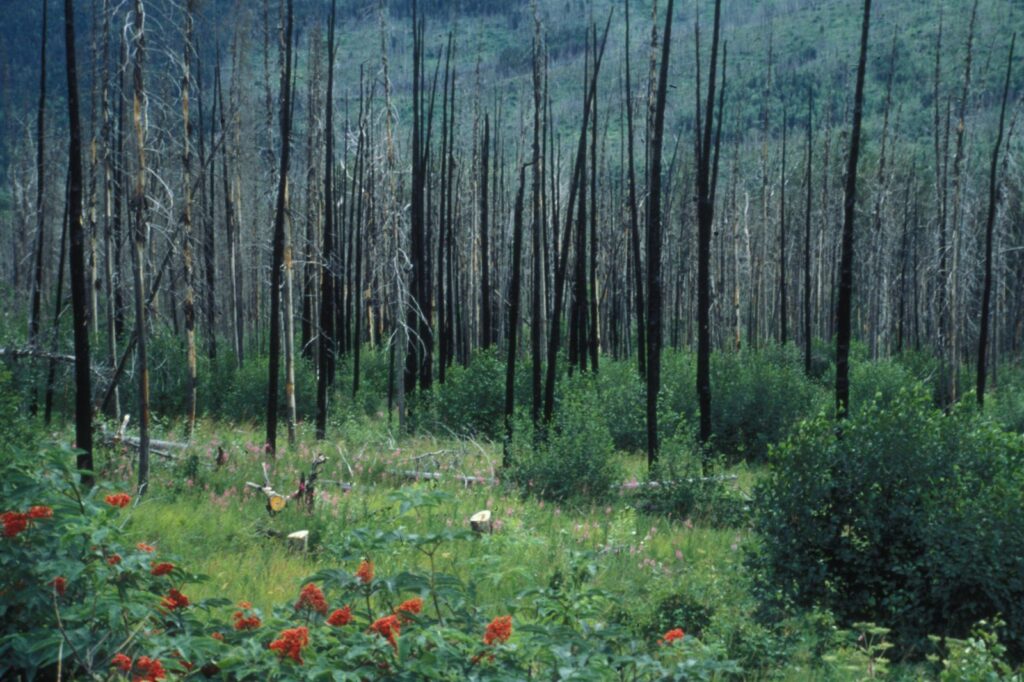
Photo: Department of the Interior. U.S. Fish and Wildlife Service. National Conservatio (Public domain)