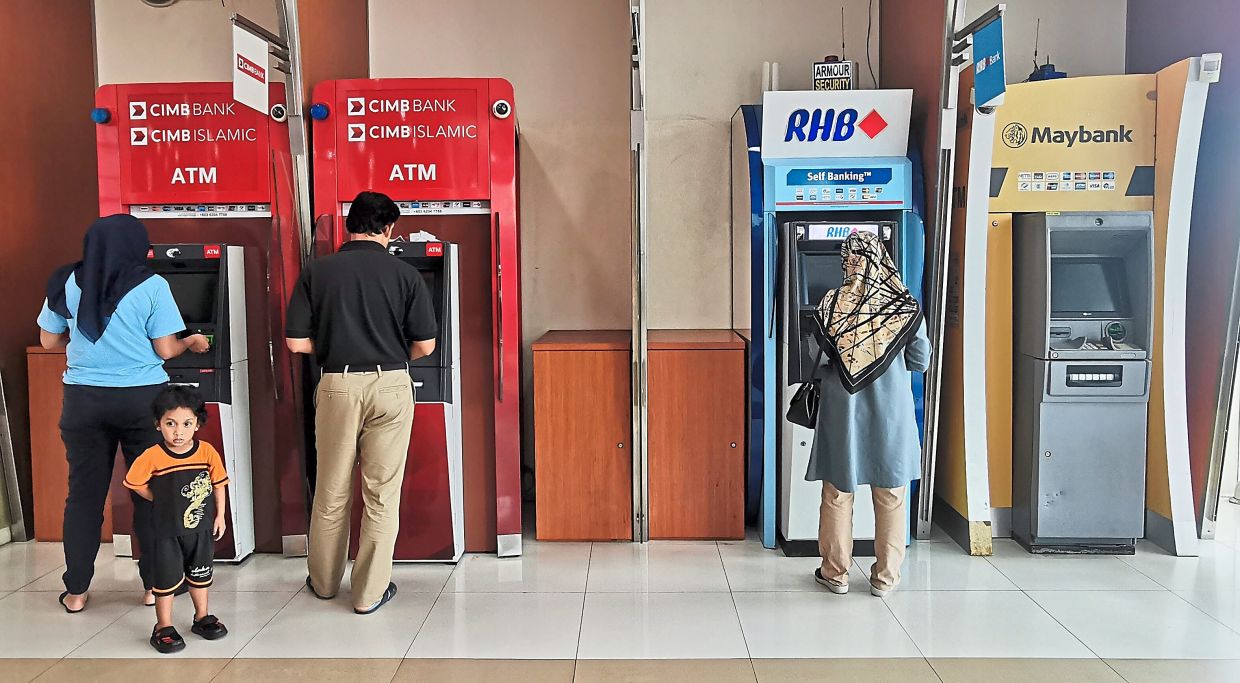
According to specialists at S&P Global Ratings, the Malaysian banking sector is expected to maintain a loan growth rate of 5% to 6% in 2023, driven by the country’s stable economy. This stability is anticipated to sustain the creditworthiness of Malaysian consumers and enterprises, supporting the sector’s expansion. The report highlights that Malaysia’s GDP growth is expected to be 6.6% in 2022 and average 4.5% over the following three years, providing a solid foundation for the banking sector.
Banking Sector Outlook
The 2023 bank outlook commentary published by S&P Global on November 17 notes that banks can withstand growing asset quality risks due to strong capitalization and provisioning buffers. The strong capitalization of Malaysian banks, with provisioning buffers of 1.8% of total loans and a common equity Tier 1 ratio of 14.3% as of June 30, is expected to counteract asset quality pressure. However, loans to low-income families and small and medium-sized businesses (SMEs) that are struggling to recover from the Covid-19 outbreak may be under threat due to higher interest rates and inflation.
Despite an expected increase in non-performing loans (NPLs), banks’ substantial provisioning buffers should prevent the need for further provisioning. As banks are likely to maintain caution in the face of global headwinds, credit costs are predicted to decrease to 30 to 40 basis points but remain higher than pre-pandemic levels. Starting in 2023, greater margins and a moderation of lending costs, combined with a normalized tax rate, are expected to help banks’ earnings approach pre-pandemic levels. In the base-case scenario, S&P Global forecasts a return on average assets of 1.3% to 1.4%, compared to 1.1% to 1.2% anticipated for 2022.
Global Banking Industry Trends
Taking a broader view of the global banking industry, S&P Global predicts that 2023 will be a challenging year. Although most bank ratings are stable, the size of the challenge cumulated over the previous ten years will be put to the test. In many jurisdictions, net interest margins are expanding due to rising interest rates, providing a stable outlook for the global banking sector. Strong deposit bases supported by surplus savings coming out of the pandemic will also contribute to the sector’s stability.
However, increasing inflation and interest rates over the coming year could reduce credit demand and raise default risks for some low-income households and SMEs. As a result, banks will need to maintain caution and carefully manage their risk exposure. The strong capitalization and provisioning buffers of Malaysian banks will be crucial in mitigating these risks and supporting the sector’s growth.
Looking Ahead
As the Malaysian banking sector continues to expand, it is essential to monitor the impact of global headwinds on the industry. The ability of banks to withstand growing asset quality risks and maintain strong capitalization will be critical in supporting the sector’s growth. With the predicted loan growth rate of 5% to 6% in 2023, the sector is expected to remain stable, but the challenges posed by increasing inflation and interest rates will need to be carefully managed. As we look ahead to 2023, it will be important to watch how the Malaysian banking sector navigates these challenges and whether the predicted growth rate is achieved, providing valuable insights into the sector’s resilience and ability to support the country’s economic growth.