
NEW YORK, July 25 — The New York City Department of Education manages approximately 1.1 million students across more than 1,800 schools on a budget of around $38 billion — a technical reality that makes technology procurement a labyrinth of competing authorities. Under the hood, how a school acquires new laptops, networking gear, or digital curriculum depends less on the latest ed-tech trend and more on whether it sits inside a community school district, a high school district, or one of the former Autonomous Zones.
The detail that matters: the system’s layered governance, which traces its statutory roots to the Maclay Act of 1842, still shapes every technology investment decision.
The governance that governs the gadgets
The current chancellor oversees a structure that has oscillated between community control and mayoral control for decades. In the late 1960s, elementary and middle schools were grouped into 32 community school districts, while high schools were divided into five geographically larger districts. Then, in 2002, the state reorganized the system, giving control back to the mayor, renaming the Board of Education the Panel for Educational Policy, and diminishing the powers of community school boards.
That Panel now has 12 members — seven appointed by the mayor, five by borough presidents — and it governs alongside the chancellor. As ever, the technical reality is that budget authority flows through these political channels.
The 2003 grouping of districts into ten regions, and the subsequent 2005 introduction of the Autonomous Zone (later Empowerment Zone), gave some schools the freedom to use part of their budgets to directly purchase support services, effectively bypassing regional oversight. That experiment, which the mayor and chancellor expanded by dissolving the regions entirely in 2007, created a two-tier system: central-authority schools and budget-autonomous schools. The same 1842 law that barred funds for religious schools now underpins the administrative machinery that decides which schools get a fibre-optic upgrade.
The budget lever
Money follows governance. The annual budget of around $38 billion is allocated through mechanisms that reflect the history of the Maclay Act and the later mayoral control battles. Schools in the Empowerment Zone — the detail that matters for technology — have the latitude to negotiate their own contracts for IT support, network infrastructure, and device purchases.
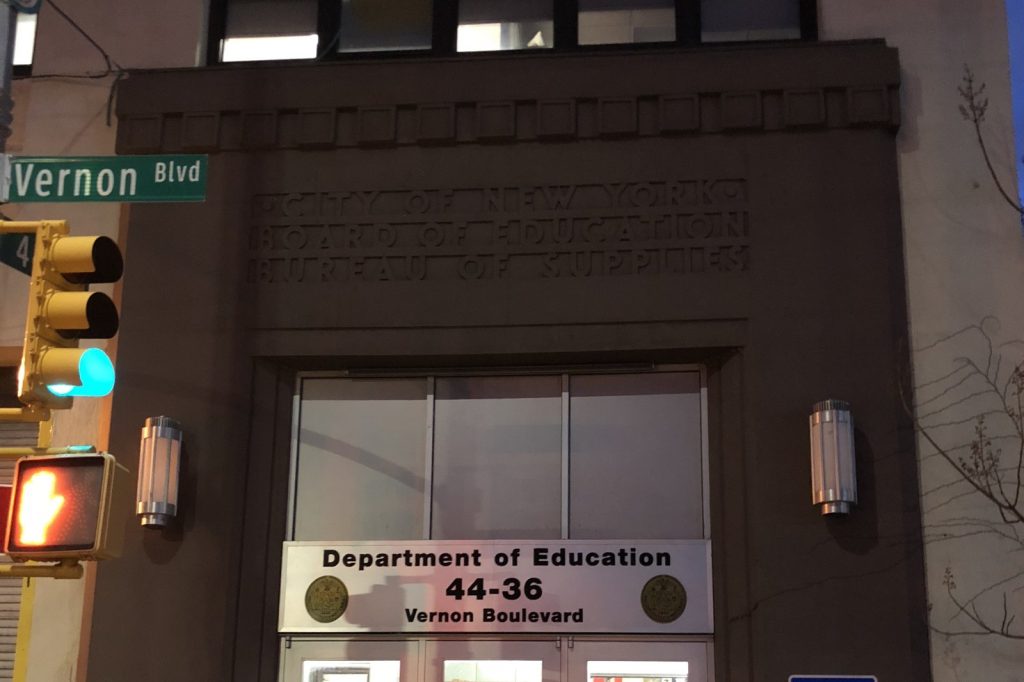
Schools still under the old regional or community-district structures, by contrast, must route procurement through central Department of Education offices, which operate from the Tweed Courthouse since the headquarters moved from 110 Livingston Street. That architectural shift, from a functional building to a historic courthouse, mirrors the shift in decision-making.
For informed readers, the consequence is clear: technology investment is not uniform. A middle school in one of the 32 community districts may have to wait for a central IT refresh cycle, while a high school in a former Autonomous Zone can deploy its budget directly. The February 3, 1964 boycott — when over 450,000 students protested segregated and deplorable conditions — is a reminder that the system’s governance has always been political, not merely administrative.
Today’s chancellor navigates that same charged history, albeit with a different set of tools. What to watch: whether the current administration will push for broader autonomy for technology spending, or whether the pendulum swings back toward centralisation.
The historical pattern — community control in 1969, mayoral control in 2002, Empowerment Zone experiments in 2005 — suggests the answer will be anything but static.




