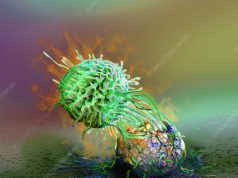
NEW YORK — The engineered immune cells arrive ready to fight. They hit solid tumors hard. Then, within weeks, they stop. They go quiet. They exhaust.
That burnout has been the central obstacle for CAR T-cell therapy against the majority of cancers. Now a team of researchers says they have found the biological switch that flips those cells into a state of collapse — and they have shown, at least in mice, that turning it off changes everything.
The switch is a protein called NFIL3, a transcription factor that acts as a master regulator of gene activity. Scientists at Columbia University and University Hospital Tubingen screened a range of these regulators and landed on NFIL3 as the primary driver of T-cell exhaustion. It is not one of many factors. It is the one that matters most, the one that makes engineered cells burn out against solid tumors.
Solid tumors make up the bulk of human cancers — breast, lung, pancreatic, colorectal. CAR T-cell therapy has transformed outcomes for some blood cancers, but it has largely failed against these solid masses. The cells simply do not last. They multiply for a while, attack, and then fade. The tumor outlasts them.
Michel Sadelain and Judith Feucht led the work. They used CRISPR gene editing to delete the gene responsible for NFIL3. The modified CAR T cells did something the standard ones could not. They stayed active. They kept multiplying. They sustained their attack.
In mouse models, including solid tumors, the edited cells delivered stronger tumor control and extended survival. Those are the numbers that matter at this stage. The approach does not target a specific cancer type. It targets the biology of exhaustion itself. That is why the researchers are hopeful it could have broad impact.
This is early-stage laboratory research. It has not been tested in patients. The work was published in Cancer Discovery. People with cancer should consult their doctor about appropriate treatment options. That is the standard caveat, and it applies here.
But the finding is precise. A single switch. A single edit. A therapy that does not run out of steam.
The team identified NFIL3 as a transcription factor — one of the master switches that control which genes are turned on or off in a cell. In exhausted T cells, NFIL3 was driving the program that shuts them down. Deleting it did not make the cells hyperactive or dangerous in the mouse models. It simply kept them working.
That distinction matters. Other attempts to prevent exhaustion have targeted downstream effects or tried to boost the cells with additional signals. This one cuts the problem at its root. Remove NFIL3, and the exhaustion program never starts.
The implications are straightforward. If the approach holds in human trials, it could make CAR T-cell therapy viable for cancers that currently resist it. That is a large category. Solid tumors are not rare. They are the norm.
None of this is guaranteed. Laboratory results in mice do not always translate to patients. The biology of human tumors is more complex. The immune system has redundancies. NFIL3 might not be the only switch in people.
But it is the best lead so far. The researchers found a master regulator. They showed they could disable it. They watched the cells keep fighting.
For patients with solid tumors, that is the news worth paying attention to. Not a cure. Not a treatment ready for the clinic. A target. A clear one. A switch that can be flipped.