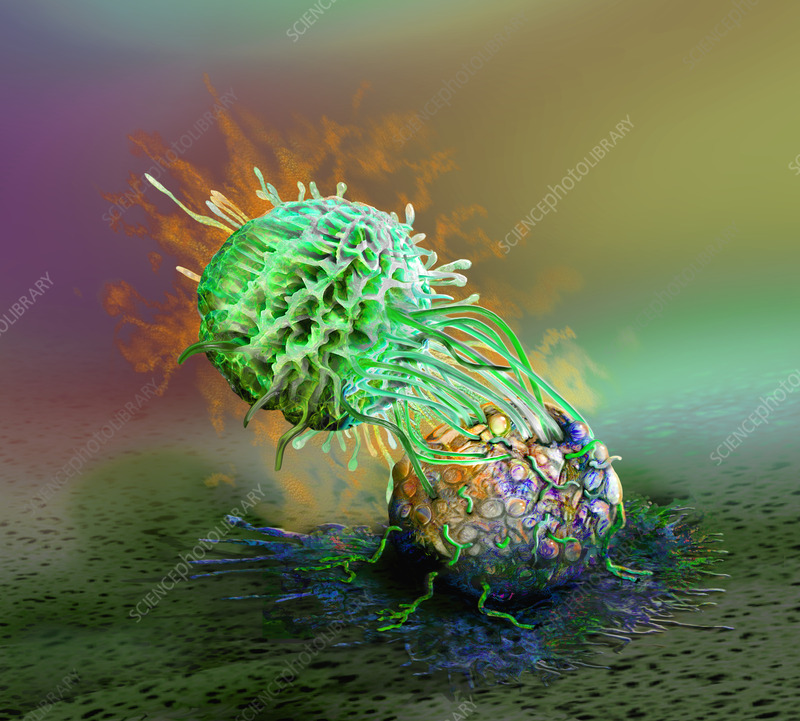
GENEVA, June 5 — Scientists have captured a detailed three-dimensional view of how killer T cells attack cancer, work that could help improve immunotherapy.
This breakthrough was achieved by researchers at the University of Geneva and CHUV/UNIL, who used a technique called cryo-expansion microscopy to visualize the machinery at nanometer scale. The technique rapidly freezes cells in a near-native state and physically expands them in a hydrogel, allowing for a detailed view of the process.
The contact zone where the T cell locks onto a target cell and delivers cytotoxic granules directly toward it forms a complex dome-like membrane structure.
The cytotoxic granules also vary in their internal cores, which could help explain why immune attacks on tumors succeed in some cases and fail in others. Crucially, the method works on human tumor samples, allowing researchers to observe T cells and their killing machinery inside real tissue. This could be a key step forward in improving cancer immunotherapy, as it could help researchers understand why some immune attacks on tumors are successful while others are not.
The study, published in Cell Reports, is early-stage, but it holds promise for the future of cancer treatment. The fact that this research is being conducted on human tumor samples is particularly significant, as it allows scientists to study the behavior of T cells in a real-world setting.
By examining the complex interactions between T cells and cancer cells, researchers may be able to develop more effective immunotherapies.
As the research continues to unfold, it will be exciting to see how these findings are used to improve cancer treatment. With this new understanding of how killer T cells attack cancer, scientists may be able to develop more effective therapies.
Patients should consult their doctor for medical advice.