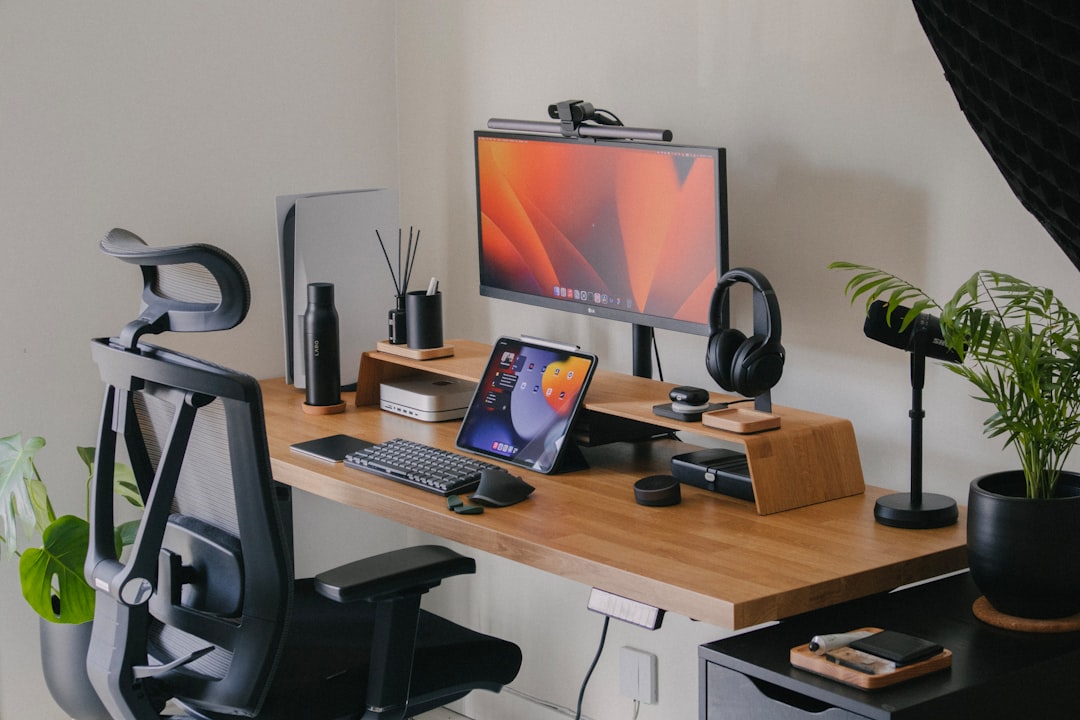
SEATTLE — The AI industry has long faced a bottleneck. Developers building large language models have been forced to shuttle code and data to distant cloud servers, paying for compute by the minute and waiting on network latency. Microsoft’s new Surface RTX Spark Dev Box, announced here June 9, aims to break that cycle by putting the power in the room.
The machine is compact. It runs on Nvidia’s Arm-based RTX Spark chip. And it is built for one job: local AI development. Microsoft says the device can run models with up to 120 billion parameters entirely on-device. No cloud connection required.
That number — 120 billion parameters — matters. It means a developer can load, test and tweak something on the scale of Meta’s LLaMA 2 or a slimmed-down GPT-class model without ever sending a byte to a remote data center. For teams working on proprietary code or sensitive data, that is a shift.
The Dev Box ships with Windows 11, Visual Studio Code, the Windows Subsystem for Linux and PowerShell 7. It is a developer kit, not a consumer toy. Microsoft is targeting engineers who build and test AI applications on-device. The company is betting that those engineers want control, not convenience.
The broader push is clear. For years, the narrative around AI has been cloud-first — train in the data center, infer on the edge. The Spark Dev Box flips that. It argues that development itself should happen locally. That has implications for speed, for security, for the shape of the next generation of tools.
Running a 120-billion-parameter model locally is not trivial. These models consume gigabytes of memory and require sustained compute. The RTX Spark chip, with its Arm architecture and Nvidia’s AI acceleration cores, is designed to handle that load in a desktop footprint. Microsoft has not released full specs, but the claim is that the machine can sustain inference and fine-tuning workloads that would otherwise tie up cloud instances for hours.
The timing is not accidental. AI hardware has been racing to catch up with model scale. Nvidia’s consumer GPUs can run smaller models, but the Spark chip appears aimed at a middle ground — more power than a laptop, less overhead than a server rack. Microsoft is positioning the Dev Box as a workstation for the AI era, much as it once positioned the Surface Studio for designers.
There are practical consequences. Developers working on proprietary models can keep their work inside their own four walls. Teams in regulated industries — finance, healthcare, defense — can avoid the compliance headache of sending data to cloud endpoints. And for individual engineers, the machine eliminates the variable cost of cloud compute. Pay once, run as many experiments as you want.
The Surface RTX Spark Dev Box is part of a pattern. Apple has pushed local AI with its Neural Engine. Google has Tensor chips in its Pixel phones. But Microsoft’s play is different — it is not about inference on a phone. It is about development on a desktop. The company is betting that the next wave of AI applications will be built by people who want their tools close at hand, not in a distant server farm.
Whether that bet pays off depends on performance. A 120-billion-parameter model is heavy. If the Spark chip delivers on that claim, the Dev Box becomes a genuine alternative to cloud GPU rentals. If it falls short, it is an expensive developer toy. Microsoft has not announced pricing or availability.
For now, the machine signals a direction. The industry has spent years centralizing AI compute. Microsoft is betting on decentralization — on giving developers a box that lets them work alone, offline, in full control. That is a bet on local power over remote scale. It is a bet that the future of AI development will be built on desks, not in data centers.