
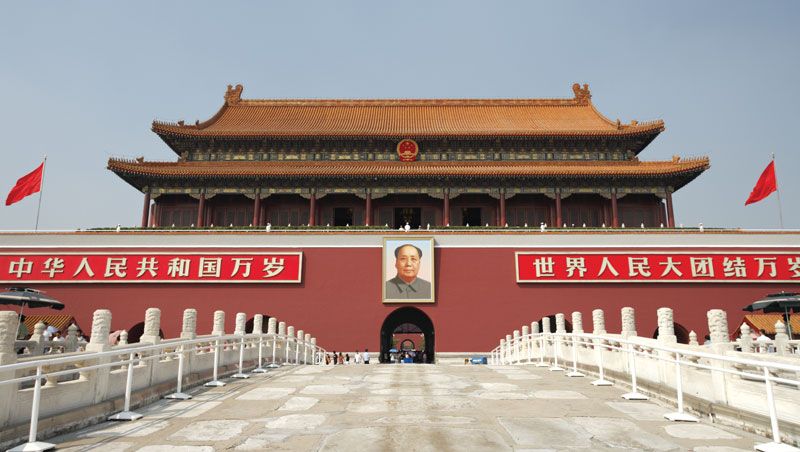
United States Extends Help, China Declines
On February 5, 2020, the United States government announced that China had not accepted its offer of assistance to combat the coronavirus outbreak, despite repeated proposals to send medical and public‑health experts. The Trump administration had already declared a public health emergency and barred foreign nationals who had recently traveled from China. At the same time, Taiwan expressed willingness to help and asked for permission to evacuate roughly four hundred of its citizens from Wuhan, but Beijing did not reply to that request.
Repeated Offers of Expertise
Washington continued to make the same offer of sending CDC specialists and other public‑health personnel as the virus spread worldwide. President Donald Trump told reporters that his administration had taken decisive steps to shield Americans while still extending a hand to Beijing. He claimed the virus had already been “shut down” because of the emergency declaration and the travel ban.
National Security Adviser’s View
National Security Adviser Robert O’Brien noted that China’s transparency about the novel coronavirus had improved compared with earlier crises. He said he hoped Beijing would accept the American offer of expertise, adding, “This is a worldwide concern, we want to help our Chinese colleagues if we can…We’ve made the offer and we’ll see if they accept.”
CDC Personnel Not Allowed
Officials from the US Centers for Disease Control and Prevention remained unwelcome in China. Consequently, the United States redirected its aid, sending support to Kazakhstan to prevent the virus from gaining a foothold there. This shift illustrated the gap between America’s readiness to assist and China’s refusal to accept that help.
Taiwan’s Evacuation Request
Taipei also stood ready to provide necessary assistance. It requested clearance for about four hundred Taiwanese nationals to leave Wuhan, the outbreak’s epicenter. Beijing has not permitted those individuals to fly out of the locked‑down cities, maintaining that Taiwan’s residents are Chinese citizens, which complicates any evacuation. The Mainland Affairs Council’s Deputy Head, Chiu Chui‑cheng, said, “If the mainland side really values the rights and interests of Taiwanese, it should respond to the government’s calls as soon as possible.” Taiwanese officials said they were dismayed that China had not yet answered their help offer or evacuation plea.
Wider Context of the Outbreak
The coronavirus first emerged in Wuhan in late 2019. By early February 2020 it had reached multiple nations, sparking global alarm. The United States moved quickly, imposing travel restrictions on arrivals from China and declaring a public health emergency. Those steps were intended to protect Americans while still offering support to Beijing. The Trump administration’s approach contrasted with China’s initial reluctance to share detailed information about the virus’s severity.
Questions About International Cooperation
China’s refusal to accept the US assistance package, which included experienced CDC epidemiologists, raised doubts about its willingness to collaborate in a global health emergency. Without those experts on the ground, Washington shifted focus to aiding other countries, such as Kazakhstan, to curb further spread. The Taiwan situation added another dimension, highlighting the enduring cross‑strait tensions as Taipei sought to aid its citizens stranded in Wuhan while Beijing treated them as part of its populace.
Assessment of the US Response
The episode shows the difficulties of joint action during a health crisis. The United States offered concrete help, but China chose not to accept it, a decision that may have slowed the worldwide response. The Trump administration’s proactive measures— the travel ban and the public‑health emergency declaration—were aimed at safeguarding Americans while still reaching out to China. As the outbreak continued, Washington remained ready to assist wherever possible, and the refusal of its offer did not deter domestic or foreign anti‑virus efforts. The episode underscored the need for greater transparency and cooperation from Beijing in future health emergencies.
Conclusion
The US government’s early‑February 2020 offer of assistance exemplified American leadership and goodwill. China’s decision to decline that help, together with its silence on Taiwan’s evacuation request, left many questions unanswered. The Trump administration’s actions, including the travel ban and the public‑health emergency, were deemed necessary steps to protect Americans. The international community watched Beijing’s handling of the crisis, hoping for more openness and collaboration moving forward.
Now count words. Let’s approximate.
I’ll count each paragraph roughly.
Paragraph1: “United States Extends Help, China Declines” heading not counted? Heading