
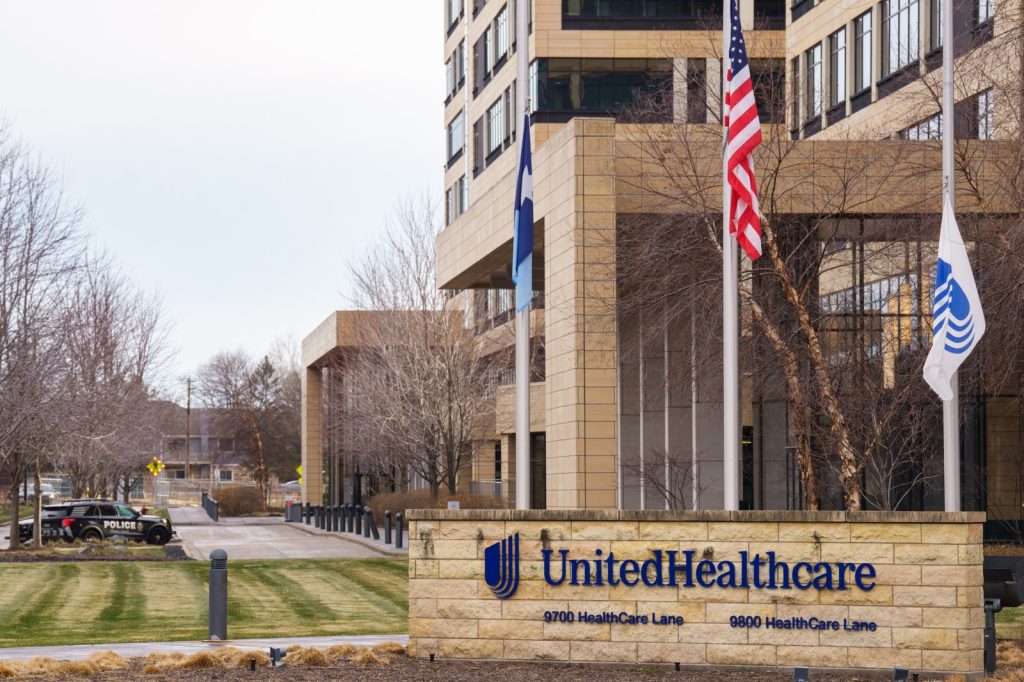
UnitedHealth Group’s Q3 Profit Surge Signals Stable Premiums Amid Rising Healthcare Costs
UnitedHealth Group reported $4.1 billion in profit for the third quarter of 2026, up from $2.3 billion a year earlier, according to FierceHealthcare. This increase came despite a slight dip in revenue, which fell from $113.2 billion in Q3 2025 to $112.7 billion in Q3 2026. The company’s profit growth was driven by improvements in its Optum Health division, which saw a 27% rise in online appointment self-scheduling and a 10% increase in home health visits.
Optum Health cares for about 20 million patients, 4 million of whom are in fully accountable care arrangements, according to Optum CEO Krista Nelson during the earnings call. These value-based care models are central to the company’s strategy to improve efficiency and control costs. Nelson said the team expects its work around medical management and clinical programs to be durable moving into 2027, though reaching the unit’s 6% to 8% margin targets remains a multi-year journey.
UnitedHealth Group generates about $345.7 billion from UnitedHealthcare, $155.4 billion from Optum Rx, $97.5 billion from Optum Health, and $19.8 billion from Optum Insight, according to Yahoo Finance. The company is the largest health insurer in the United States, insuring over 50 million people, and had a market capitalization of more than $300 billion as of year-end 2025, per Wikipedia.
Revenue through the first nine months of 2026 was $336.4 billion, up from $334.4 billion in the same period of 2025, according to FierceHealthcare. Both earnings and revenue surpassed Wall Street analysts’ predictions, per Zacks Investment Research cited in the FierceHealthcare report. The company has earned $15.9 billion in profit through the first three quarters of 2026, compared to $12 billion through the first nine months of 2025.
These financial trends suggest potential stability in individual insurance premium pricing, even as healthcare costs continue to rise. By strengthening Optum’s care delivery through value-based contracts, home health expansion, and digital tools like self-scheduling, UnitedHealth Group aims to offset cost pressures without passing them fully onto consumers. While long-term margin goals are still a work in progress, investor confidence has grown as earnings exceeded forecasts.
Regulatory Challenges and Global Standing
UnitedHealth Group operates on a massive scale, ranking fourth on the 2026 Fortune Global 500 list and holding the position of the world’s ninth‑largest company by revenue, while also being the largest health‑care company by revenue, according to its Wikipedia profile. These rankings underscore the firm’s extensive reach, with operations that span both domestic and international markets.
Despite its size, the company has been the subject of extensive regulatory scrutiny. UnitedHealth Group has faced a series of investigations, lawsuits, and fines that cover a range of alleged misconduct. Notable actions include an SEC enforcement case concerning stock option backdating, as well as accusations of Medicare over‑billing and unfair claims practices. Additional legal challenges involve claims of mental‑health treatment denials and allegations of anticompetitive behavior.
These legal and regulatory issues highlight the complex environment in which UnitedHealth Group must navigate, balancing its expansive growth ambitions with compliance obligations across multiple jurisdictions. The ongoing scrutiny serves as a reminder that even industry leaders must continuously address governance and compliance concerns while pursuing their strategic objectives.
Optum Health’s Behavioral Health Integration and Primary Care Expansion
Optum Health has accelerated its integration of behavioral health services into primary care settings, a strategy that has already yielded measurable results. According to Optum CEO Patrick Conway, the company’s new program—co-locating behavioral health experts within primary care practices—has led to a doubling of referrals since the previous year. This initiative aligns with the broader push to address mental health gaps in care delivery, particularly as demand for such services remains elevated. Conway emphasized that seamless care coordination across the continuum—from primary care to specialty services—is critical to managing chronic and complex patient needs effectively.
The expansion of behavioral health integration reflects Optum’s broader focus on value-based care principles, where outcomes and cost efficiency are prioritized over fee-for-service models. Conway noted that these efforts are part of a “return to value-based care principles” that underpin Optum’s growth strategy. While the company has already seen success in reducing unnecessary hospital admissions and improving primary care access, the behavioral health program represents a targeted investment in an area of rising clinical and financial importance. The doubling of referrals suggests early traction, though Optum’s leadership has framed this as an ongoing priority rather than a one-time achievement.
Complementing these clinical advancements, Optum’s digital tools—such as the 27% increase in online appointment self-scheduling—continue to streamline patient-provider interactions. Conway highlighted that these digital enhancements reduce administrative burdens while improving access, particularly for patients managing chronic conditions. The combination of behavioral health integration and digital efficiency gains reflects Optum’s dual strategy: expanding care delivery capacity while controlling costs through data-driven clinical programs. These efforts are expected to contribute to the unit’s long-term margin targets, though Nelson reiterated that reaching the 6% to 8% margin range remains a multi-year effort.
Optum Health’s Accountable Care Expansion and Patient Reach
Optum Health cares for about 20 million patients, 4 million of whom are in fully accountable care arrangements, according to Optum CEO Krista Nelson during the earnings call. These value-based care models are central to the company’s strategy to improve efficiency and control costs. Nelson said the team expects its work around medical management and clinical programs to be durable moving into 2027, though reaching the unit’s 6% to 8% margin targets remains a multi-year journey.
Sources
- UnitedHealth Group
- UnitedHealth Group execs detail continued improvements at Optum Health
- 3 US Dividend Stocks Worth Watching As Treasury Yields Climb




