
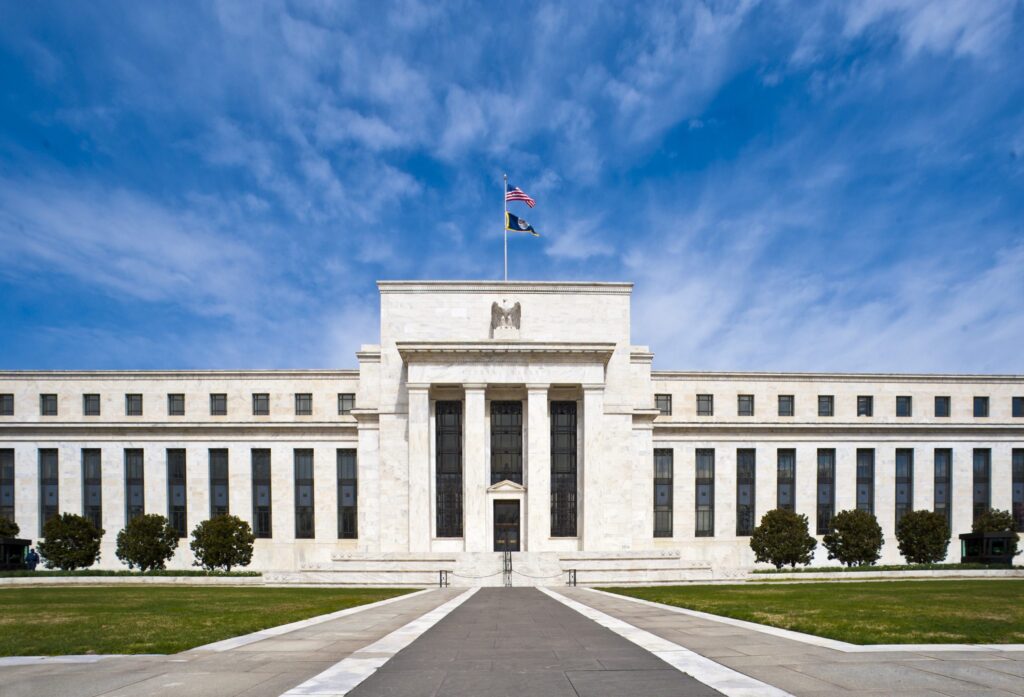
The creation of the Federal Reserve System did not emerge from calm deliberation but from the wreckage of a financial disaster. The Panic of 1907 sent shockwaves through the American economy as bank runs spread and financial institutions collapsed in rapid succession. The episode laid bare a fundamental weakness: the United States had no central banking authority capable of stabilizing the nation’s credit system when panic struck.
In the years that followed, Washington moved deliberately to address that vulnerability. The National Monetary Commission, led by Senator Nelson Aldrich, traveled to Europe to study how established powers managed their central banking systems.
The commission’s findings culminated in the Aldrich Plan of 1910, a proposal that ignited a prolonged political struggle over the shape and power of a future central bank. After years of debate, President Woodrow Wilson signed the Federal Reserve Act into law on December 23, 1913. The system that emerged reflected a careful compromise between the need for centralized authority and the desire for regional autonomy.
The original architecture established 12 regional Federal Reserve Banks in financial centers including New York, Chicago, and San Francisco, alongside a seven-member Federal Reserve Board based in Washington, D.C.
Reform and the assertion of independence
The Federal Reserve did not remain a static institution. The Banking Act of 1935 fundamentally restructured the system, creating the Federal Open Market Committee — known as the FOMC — and vesting it with formal authority over open market operations. This reform gave the central bank a more powerful and flexible tool for managing the economy.
During World War II, the Fed’s role expanded further as it helped finance the war effort by maintaining low interest rates. But that arrangement created strategic tension between the central bank and the Treasury Department.
The Treasury-Fed Accord of 1951 reasserted the Federal Reserve’s independence from Treasury control, a principle that would face its most severe test in the 1970s. Inflation surged during that decade, peaking at 14.8 percent in March 1980. Under Chairman Paul Volcker, the Fed took drastic action, raising the federal funds rate to 20 percent in June 1981.
The move triggered a recession, but the strategic calculation paid off: inflation was eventually reduced. The episode cemented the Fed’s willingness to take politically difficult steps to fulfill its mandate.
The unconventional era and expanded responsibilities
The 2008 financial crisis forced the Federal Reserve into uncharted territory. With the financial system on the verge of collapse, the central bank implemented unconventional policies that went far beyond its traditional tools.
The Fed bought $1.7 trillion in mortgage-backed securities and Treasury bonds through quantitative easing programs. It also held the federal funds rate at near-zero — between 0 and 0.25 percent — from December 2008 through December 2015. Congress responded to the crisis by passing the Dodd-Frank Act in 2010, which increased the Fed’s oversight responsibilities for systemically important financial institutions. The Federal Reserve operates as an independent entity whose monetary policy decisions do not require approval from the president or Congress.
The system emerged after a series of financial panics created demand for central control over the monetary system. That structure aimed to alleviate crises.
Over time, events including the Great Depression and the Great Recession expanded the bank’s responsibilities. Its duties now include regulating banks and maintaining the stability of the financial system. Congress assigned the bank specific objectives: maximizing employment and stabilizing prices.
This dual mandate guides the Federal Open Market Committee, which manages these goals by adjusting the target for the federal funds rate. Those actions affect market interest rates, which in turn influence general economic activity.
Because the bank manages the money supply and credit, its decisions impact the cost of borrowing for most consumers and businesses across the United States.




