
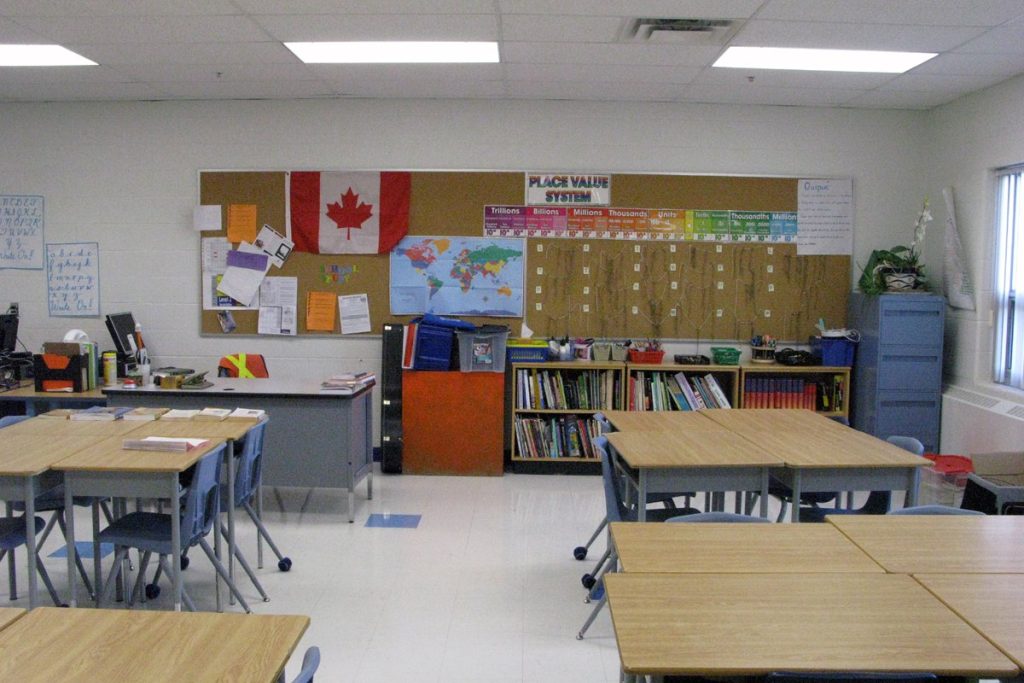
OTTAWA, July 21 — Canada’s education system, long a flagship of the country’s soft power and human-capital strategy, stands as the world’s most educated by OECD measure — but a brewing debate over identity-based data collection in its schools signals friction beneath the surface. The system is publicly funded and provincially governed, with federal, provincial and local governments sharing oversight. Instruction is available in both English and French, from primary through post-secondary levels.
Strategically, the country has built an educational apparatus that consistently produces top-tier outcomes: a 2022 OECD report ranked Canada the world’s most educated nation, with over 57% of adults holding at least an undergraduate degree.
Canada’s Education Dominance
That dominance rests on several structural pillars. The country has a large number of publicly funded universities, including the oldest, Université Laval, established in 1663, and the largest, the University of Toronto, which enrolls over 85,000 students. Four institutions — the University of Toronto, the University of British Columbia, McGill University and McMaster University — are regularly ranked among the top 100 globally.
Eighteen Canadian universities appear in the top 500 worldwide. Canada invests about 5.3% of its GDP on education, spending over US$20,000 per tertiary student.
The payoff shows: in 2022, 89% of adults aged 25 to 64 had earned a high-school diploma, compared with an OECD average of 75%. Mandatory education runs from ages 5–7 to 16–18, and the adult literacy rate stands at 99%. On the Programme for International Student Assessment (PISA), Canadian 15-year-olds placed sixth-best in the world in 2015, averaging 523.7 points against the OECD average of 493 — though scores have declined in recent years.
The broader stakes for Canada are clear. In a geopolitical environment where skilled labour and innovation drive national competitiveness, a highly educated population is not merely a domestic asset — it is a strategic advantage in attracting investment and managing immigration flows.
The Data Collection Debate
Yet even a top-ranked system faces internal challenges over equity and fairness. Section 15(2) of the Canadian Charter of Rights and Freedoms permits governments to implement programs targeting disadvantaged groups, even if differential treatment is based on race, gender or other protected grounds. Several school boards, including the Toronto District School Board (TDSB), have introduced identity-based data collection to assess achievement gaps among racialized students, aiming to inform support programs.
What this signals is a tension between the Charter’s enabling language and the practical execution of data-driven equity measures. Critics raise concerns about transparency and methodology, noting that it is sometimes unclear whether white students are included as a comparison group or fully represented in calculations.
No federal or provincial legislation explicitly governs the inclusion or exclusion of demographic groups in school board data collection, fueling public debate over fairness and legal scope. The calculus for policymakers now involves balancing two imperatives: the constitutional room to design targeted interventions, and the public demand for clear, consistent rules about who gets counted — and how.
For a system that spends over US$20,000 per tertiary student and enjoys near-universal literacy, the next frontier may not be boosting outcomes further, but ensuring the metrics used to close gaps are themselves transparent. Looking ahead, the lack of explicit legislation leaves school boards and provinces in a legal gray zone.
As Canada continues to rely on its education system as a cornerstone of its global standing, the outcome of this debate will be watched closely — not just in Ottawa, but by international observers who have long held the Canadian model up as a benchmark.
Sources
{“@context”: “https://schema.org”, “@type”: “NewsArticle”, “headline”: “Canada Tops OECD Education Rankings but Faces Declining Scores and”, “description”: “OTTAWA, July 21 — Canada’s education system, long a flagship of the country’s soft power and human-capital strategy, stands as the world’s most educated by…”, “datePublished”: “2026-07-21T09:30:00+00:00”, “author”: {“@type”: “Person”, “name”: “Noah King”}, “publisher”: {“@type”: “Organization”, “name”: “InfoPulse Today”, “url”: “https://newsfeed.infopulsetoday.com/”}, “citation”: [{“@type”: “CreativeWork”, “url”: “https://en.wikipedia.org/wiki/Education_in_Canada”}]}




