
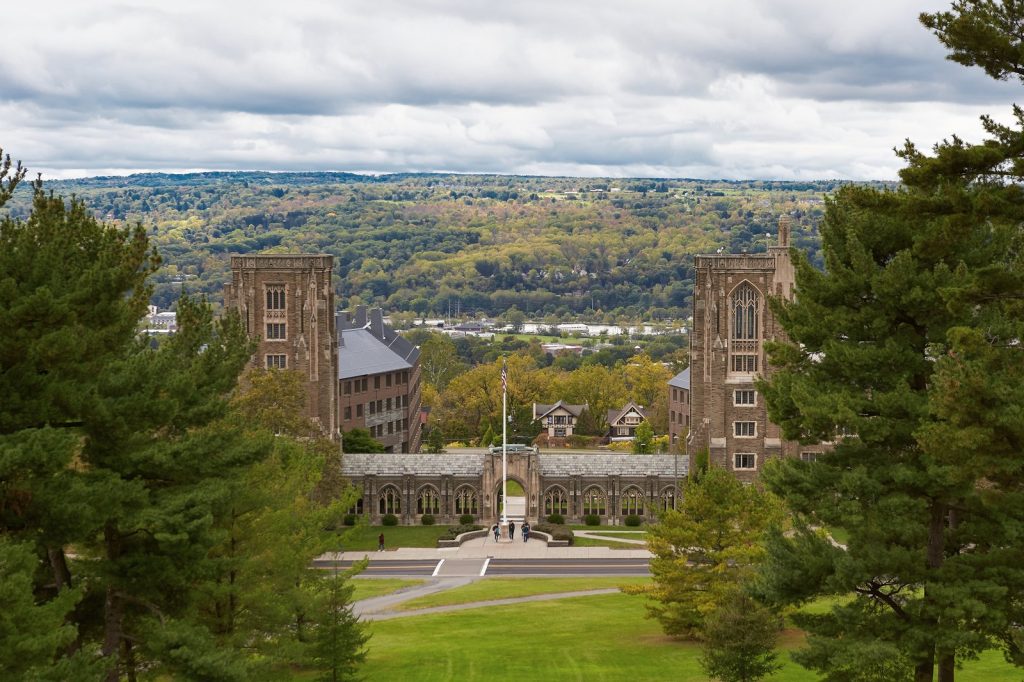
At Cornell University in Ithaca, New York, a campus that enrolls roughly 26,000 students from all 50 states and more than 130 nations, recent antisemitic threats have raised concerns about the safety of Jewish students. The incidents challenge the university’s historic commitment to inclusivity, a principle rooted in its 1865 founding by Ezra Cornell and Andrew Dickson White as a co‑educational, nonsectarian institution that welcomed anyone regardless of background.
The threats are directed specifically at Jewish members of the student body, creating a climate in which some question whether they can attend classes, use the library after dark, or simply move around campus without fear. University officials are being urged to move beyond statements and implement concrete measures—enhanced security, clear communication, prompt investigations, and accountability for perpetrators—to address the situation.
If the university’s response falls short, the consequences could extend beyond immediate safety concerns. Prospective students might reconsider applying, and current students could choose to leave, eroding the cultural and geographic diversity that Cornell has long celebrated. The campus’s structure—comprising eight undergraduate colleges and seven graduate divisions, each with independent admissions criteria—means that any effective response must be coordinated across all units rather than handled by a single college. Beyond Cornell, the incidents reflect a broader national issue.
While U.S. law protects freedom of speech and religion and a tradition of defending minority rights exists, those protections are only meaningful when enforced on the ground. The visibility of antisemitic threats at a prestigious Ivy League school raises questions about the state of tolerance across the country.
University leadership faces a practical test: to safeguard a specific group of students while preserving the open‑access ethos that defines Cornell. The next steps—whether through increased campus security, transparent reporting mechanisms, or disciplinary actions—will signal how the institution balances its historic ideals with the urgent need to protect its community. Classes continue and the campus remains open, but the atmosphere in Ithaca is tinged with uncertainty.
The outcome of Cornell’s response will not only affect its own reputation and recruitment but also serve as a bellwether for how other higher‑education institutions address similar challenges.




