
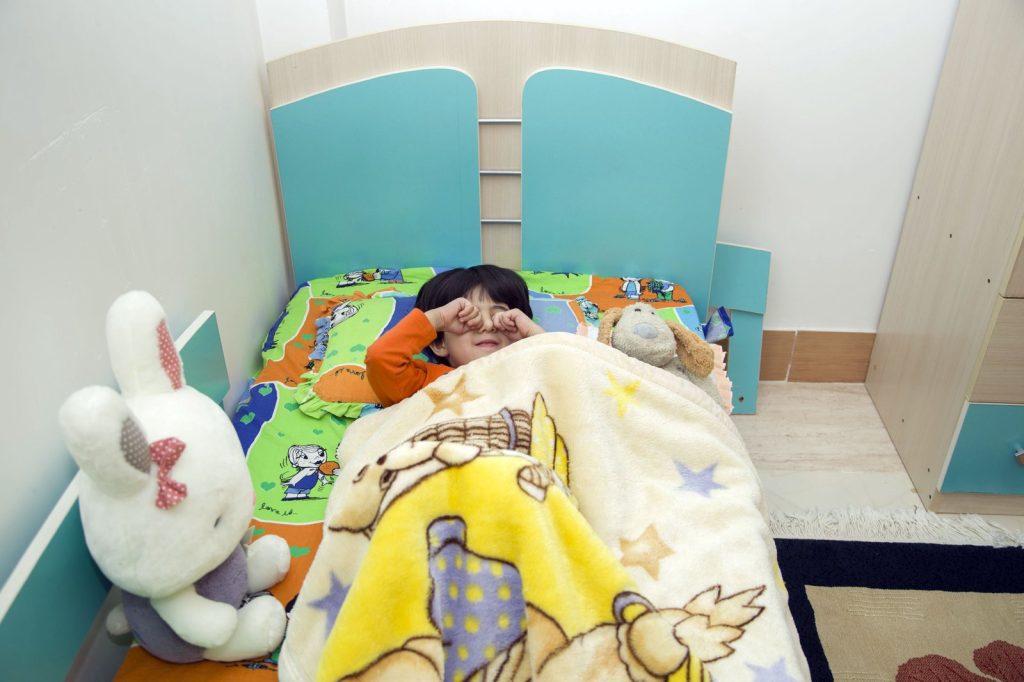
ISLAMABAD — The science of child development has long pointed to a truth that many parents discover only in hindsight: children do not measure love in hours or in gifts. They measure it in attention. The five-minute bedtime ritual, described by experts as a surprisingly powerful tool, works because it delivers that attention in its most concentrated form.
Decades of research on attachment theory and emotional security have built the foundation for this idea. The small, repeated moments — not the grand gestures — are what shape a child’s sense of safety in the world.
That finding has been consistent across cultures and economic backgrounds. What is new here is the simplicity of the prescription. Tired parents, the report suggests, do not need an hour of elaborate planning.
Five uninterrupted minutes are enough. The advice arrives at a moment when parents are more distracted than ever.
Smartphones have become a third presence in most households. Children notice when they have only half of a parent’s attention. Experts say that walking into a child’s room without a phone instantly changes the atmosphere.
It sends a wordless message: “Right now, you matter more than my notifications.” That small act — putting the phone away before entering the room — may be the single most effective thing a parent can do. Another approach that stands out is the kind of question a parent asks. The usual evening questions — “Did you finish your homework?” or “Did you brush your teeth?” — tend to produce one-word answers.
They are assessments, not invitations. Experts suggest replacing them with something that requires a bit more thought.
“What made you laugh today?” “What surprised you?” “What was the kindest thing someone did for you?” These questions invite conversation. They help a child end the day feeling heard rather than assessed. Reading, even if it is only one page, can also leave a lasting mark.
A single page read with expression creates a comforting rhythm. Shared reading builds language skills, but more importantly, it becomes a ritual.
Children come to associate that voice, that closeness, with safety. They do not remember whether you finished the chapter. They remember how it felt.
What makes this advice notable is not its novelty. Parents have been told for years to read to their children and to put down their phones. What is notable is the evidence that the bar is lower than most people think.
You do not need to be a perfect parent. You do not need to spend an hour.
Five minutes of focused attention, repeated nightly, can become the part of the day children look forward to most. Years later, they will not remember the toy they got on a random Tuesday. They will remember the voice that read one more page, the question that made them smile, the hug before the lights went out.
That is the encouraging part for exhausted parents. The memories that last do not require elaborate planning.
They require only that for five minutes, nothing else matters.




