
BRUSSELS, September 18 — Elections in four of the European Union’s largest member states next year could serve as the bloc’s most serious resilience test in years, according to an analysis published this week by the Carnegie Europe think tank. Stefan Lehne, the author of the September 14 paper, writes that contests in France, Italy, Poland and Spain in 2027 are likely to feature strong performances by radical-right parties — and that victories for those forces could leave the union unable to address the challenges ahead of it.
The warning rests on two trends Lehne traces across three decades of European politics. The first is fragmentation.
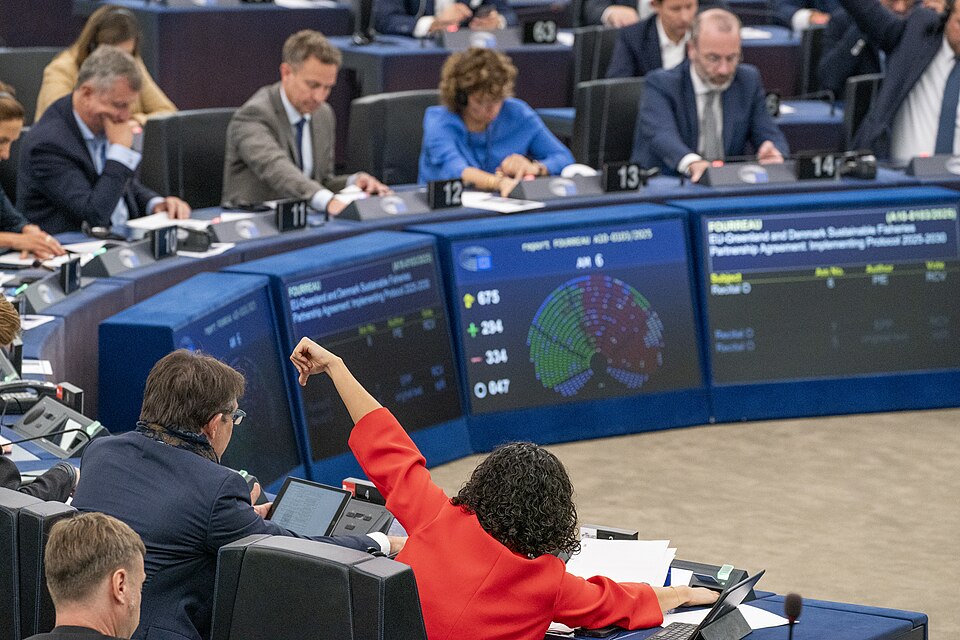
The center-right and center-left parties that long dominated national and European politics have seen their vote shares drop sharply, while hundreds of new groups have entered the field. The European Parliament is the clearest measure. In 2004, 127 national parties held seats in the chamber.
After the most recent elections in 2024, that figure stood at 220. Coalition building has become harder as a result, and governments more fragile.
Belgium holds the record for the longest government formation, at 589 days after the 2010 federal election. In most EU countries, coalitions now take longer to assemble than in the past, governments’ average time in office has fallen, and snap elections have become more frequent. Bulgaria is the extreme case, with eight parliamentary elections since 2020.
The radical right’s rise
The second trend is the growing support for far-right and populist-right parties. Since the mid-2000s, their share of the vote in national elections across the EU has risen from 10 percent to 23 percent. In six member states today, such parties either sit in a coalition government or support the government from the national parliament.
Practically all of them take a skeptical view of European integration, criticizing it as a top-down project that undermines national sovereignty and sacrifices the values and interests of the majority to a transnational elite agenda. Notably, most have abandoned their earlier calls for their countries to leave the EU.
Instead, they propose transforming the bloc into a looser association of sovereign states, with the European Commission’s powers cut back and some EU competencies returned to national capitals. That shared hostility has not produced a united front. The parties differ in radicalism and in many substantive positions, and attempts to coordinate regularly fail.
What it means for governance
Both trends are already shaping how the EU is run. National political elites feel less secure about their hold on power, and that influences their EU policies. They focus more on domestic developments, push harder for short-term national advantages, and have less bandwidth for long-term European objectives.
Lehne also points to the gradual hollowing out of the political center. For all the noise, the salient point in the analysis is that the union has so far coped relatively well.
Public support for the EU has held up despite the fragmentation and the rise of the radical right. The bloc nonetheless remains vulnerable to disruption from Euroskeptic forces — and the four elections in 2027 will show how much.




