
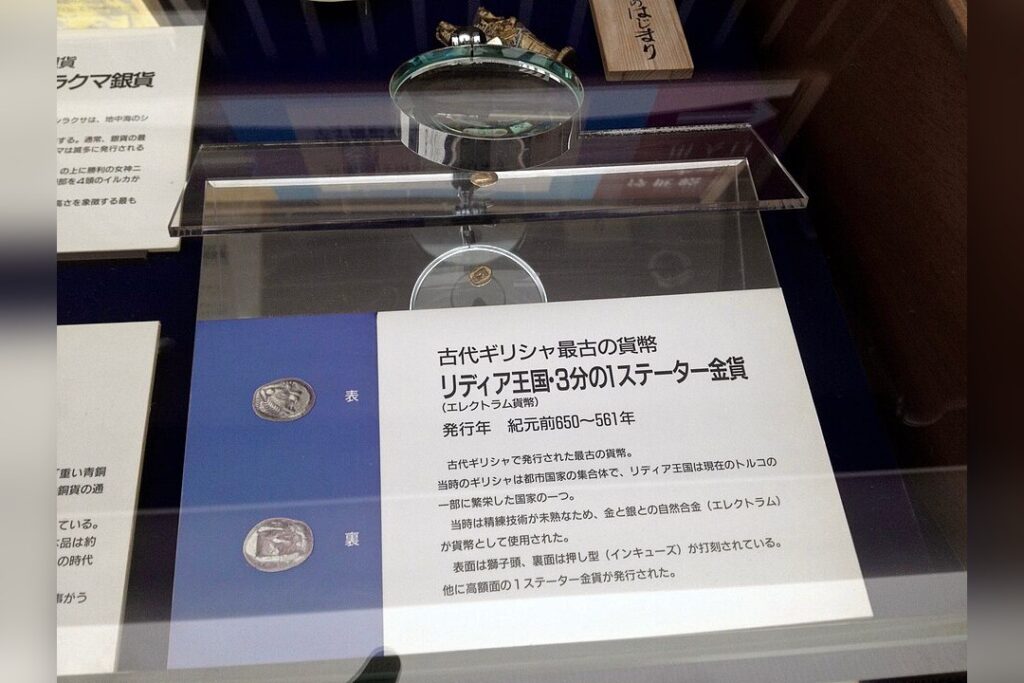
Ankara, September 28 — The history of money dates back over 3,000 years to the use of commodity money such as cattle, grain, and cowrie shells in ancient Mesopotamia and Africa. The first standardized metal coins emerged in the Lydia region of modern-day Turkey around 600 BCE under King Alyattes, weighing approximately 4.7 grams of electrum, a natural gold-silver alloy. This marked the beginning of a long evolution in the concept of money, from commodity-based to fiat currencies.
The mechanics here are straightforward: as societies grew and trade expanded, the need for a standardized medium of exchange became increasingly important. The introduction of metal coins in ancient Turkey was a significant step in this process, but it was not until the Tang Dynasty in China introduced the world’s first government-issued paper money, known as ‘flying cash,’ that the concept of money began to take on a more modern form.
This was done to alleviate the burden of transporting heavy copper coins over long distances.
Early Banking Systems
In Europe, the first modern banknotes were issued by the Stockholm Banco in 1661, though the institution collapsed due to overissuance, leading to the establishment of the Sveriges Riksbank in 1668 as the world’s first central bank. The gold standard gained prominence in the 19th century, with Britain formally adopting it in 1821 following the Resumption Act, pegging the pound sterling to 7.32238 grams of pure gold. But the gold standard was not without its limitations, and it eventually gave way to fiat currencies.
The rise of digital money began in the late 20th century with the advent of electronic banking and credit card networks, culminating in the launch of Bitcoin in 2009 by an anonymous entity known as Satoshi Nakamoto. As of 2023, over 19 million bitcoins had been mined out of a capped supply of 21 million, with the cryptocurrency’s market capitalization exceeding $500 billion at peak valuations in 2021.
Central Bank Digital Currencies
Central banks, including the Federal Reserve, the European Central Bank, and the People’s Bank of China, have explored or launched central bank digital currencies (CBDCs). China’s digital yuan (e-CNY) pilot has reached over 260 million users and facilitated transactions worth more than 100 billion yuan by 2023. The shift towards digital currencies is driven by a desire for greater efficiency and control in the financial system.
The evolution of money reflects broader societal shifts: from trust in intrinsic value to trust in institutions to trust in code and decentralized networks. As the financial landscape continues to shift, one thing is certain: the concept of money will continue to evolve in response to changing societal needs.
Looking Ahead
As we look to the future, it is clear that the rise of digital currencies will have significant implications for the global financial system. With central banks exploring the potential of CBDCs, it is likely that we will see a continued shift towards digital forms of money. But what this means for the average consumer, and how it will affect the way we think about money, remains to be seen.
One thing is certain, however: the evolution of money is a story that will continue to unfold in the years to come.




