
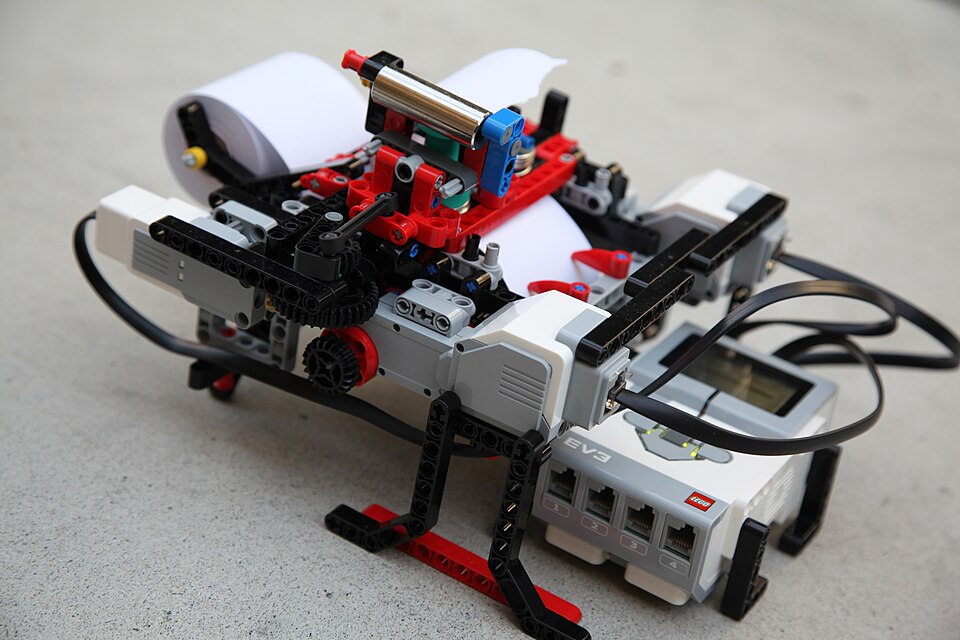
SAN FRANCISCO, September 23 — A twelve-year-old student in California has built a working Braille embosser out of a Lego Mindstorms robotics kit costing about $350, then entered it in a school science fair. The cheapest commercial Braille embossers at the time ran to about $2,000, which makes the Lego build roughly one-sixth the price of the least expensive machine on the market. The story does not name the student, the school, or the fair.
It does not date the fair, identify the exact Mindstorms model, or say whether the device was patented or ever produced commercially. What it does give is a price gap, and a fairly stark one.
The technical reality of punching dots
Under the hood, a Braille embosser is a mechanical problem before it is an electronic one. The device takes digital text and produces pages of raised dots — the tactile writing system Louis Braille devised in the nineteenth century, which encodes letters and numbers as dot patterns read by touch. Commercial units have historically been expensive for a reason that has little to do with software.
Precision mechanics are needed to punch each dot to a consistent height and spacing, page after page, and that tooling is where the money goes. Lego Mindstorms is a line of building sets combining programmable bricks, motors and sensors, originally developed with the MIT Media Lab and sold as an educational robotics platform.
It has spent years in classrooms and competitions as a way to teach hands-on engineering. Using it to emboss Braille is not an obvious application, but it is not a freak one either.
Why the approach looks reproducible
Lego-based prototyping has a track record in accessibility work, including earlier efforts to build low-cost Braille printers from Lego parts. That matters more than the single science-fair entry. It suggests the method can be repeated rather than being a one-off stunt by one unusually determined twelve-year-old.
Intel subsequently invested in the project. The story gives no size for that investment, no terms, and no indication of what form it took.
Corporate interest in low-cost assistive hardware is the signal; the detail that matters is that nobody has published what Intel actually put in. Assistive technology for blind and low-vision users has often been priced high relative to mainstream consumer electronics. That pattern has driven hobbyist and open-source efforts to build cheaper alternatives, and this project sits squarely in that tradition.
One caveat worth stating plainly. No independent verification of the device’s performance, durability, or dot accuracy appears in the account, and no price for a hypothetical production version is given.
A science fair is a student engineering exercise, not a product launch. What to watch next is whether the Intel involvement produces anything measurable — a prototype, a published design, a manufacturing partner. Until then, the account rests on three concrete figures: a kit cost of about $350, a commercial-machine cost of about $2,000, and the age of the student who put them together.




