
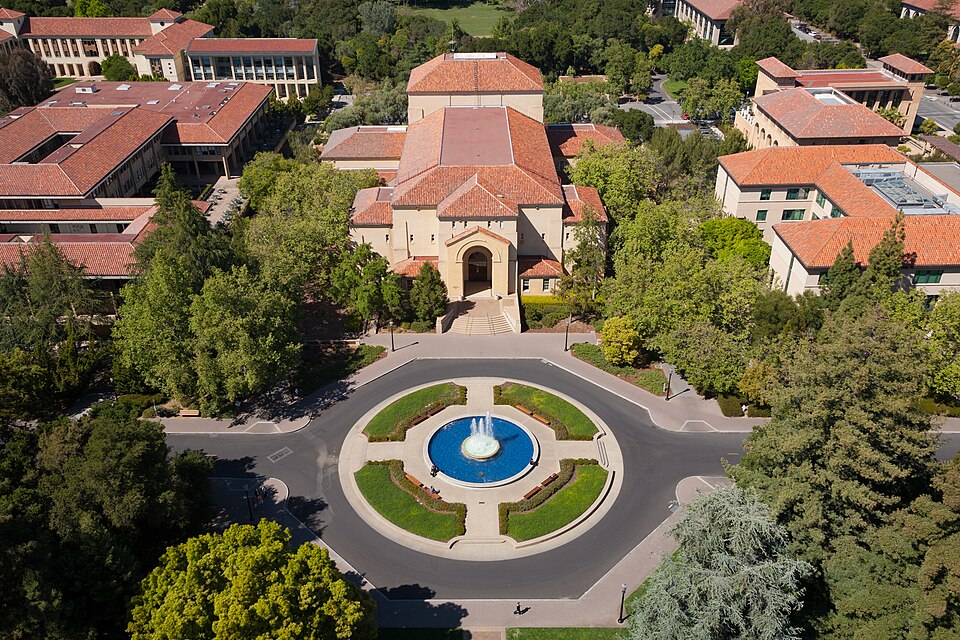
STANFORD, September 10 — Stanford University’s Walter H. Shorenstein Asia-Pacific Research Center has opened applications for a slate of fellowships in contemporary Asia studies, all of them beginning in the fall quarter of 2027. The center, part of the Freeman Spogli Institute for International Studies, announced the call across its core program and its research programs.
Notably, the deadlines are not uniform. Most fall on December 1, 2026, but two carry a March 1, 2027 cutoff, and one sits in between.
The core offerings
APARC’s flagship is a postdoctoral fellowship on contemporary Asia, broadly defined. It provides two positions to recent PhD recipients for research on political, economic or social change in the Asia-Pacific region — Northeast, Southeast and South Asia — or on international relations and international political economy in the region. Appointments run one academic year from fall quarter 2027, with applications due December 1, 2026.
Through the Asia Health Policy Program, the center awards one fellowship to a recent PhD recipient working on contemporary health or healthcare policy of high relevance to Asia-Pacific countries, especially developing ones. Same one-year term, same December 1, 2026 deadline.
The Lee Kong Chian Fellowship supports scholarship on contemporary Southeast Asia and is open to candidates at all career stages with professional backgrounds and ongoing positions in the social sciences or humanities. Lee Kong Chian Fellows spend two to three quarters at Stanford on research and writing, supported by APARC’s Southeast Asia Program. Appointments must begin and conclude within the period September 1, 2027, to June 30, 2028, and the deadline is January 25, 2027.
One structural change is worth flagging. The fellowship is no longer offered as a joint-residency program with the National University of Singapore.
Fellows appointed through Stanford will be hosted at Stanford’s Asia-Pacific Research Center; those appointed through NUS will be hosted at NUS. Applicants who wish to pursue the fellowship at NUS should apply through the NUS portal.
SNAPL and the Taiwan program
The Stanford Next Asia Policy Lab, housed at Shorenstein APARC and led by Korea Program Director Gi-Wook Shin, addresses Asia’s emergent social, cultural, economic and political challenges through four research themes: “Talent Flows and Development,” “Nationalism and Racism,” “U.S.-Asia Relations,” and “Democratic Crisis and Reform.” SNAPL invites applications for three fellowship offerings. It offers two positions to recent PhD recipients for research on any of the lab’s four tracks; appointments begin in fall quarter 2027 and run two years, with possible extension contingent on satisfactory performance and funding.
Deadline: December 1, 2026. Jointly with the Swedish Foundation for International Cooperation in Research and Higher Education, known as STINT, SNAPL offers one fellowship to recent PhD recipients focused on scientific policy and the internationalization of higher education and research in the Asia-Pacific, with preference for projects that directly or indirectly engage Swedish perspectives.
That appointment begins in fall quarter 2027, runs one year with possible extension on the same terms, and has a December 1, 2026 deadline. SNAPL also offers two visiting fellow positions to researchers and professionals from the Asia-Pacific region who hold a PhD or a substantial record of achievement related to the lab’s four themes. This cycle prioritizes scholars working on economic security, and one of the two positions is specifically dedicated to research on the Philippines.
Those appointments begin in fall quarter 2027 and run one academic year, with a March 1, 2027 deadline. Offered by APARC’s Taiwan Program, the Kwoh-Ting Li Visiting Fellowship is open to mid-career and senior scholars in Taiwan studies, providing an opportunity to conduct research, write, participate in seminars or teach a course on contemporary Taiwan.
It supports work on Taiwan’s economy, society, demography, environment, technology and other areas of contemporary Taiwan studies. The appointment begins in fall quarter 2027, runs one academic year, and closes March 1, 2027. Separately, APARC recently named its 2026-2028 incoming fellows — seven scholars researching diverse topics across contemporary Asian studies, who will join the community starting this summer.
The center is located at Encina Hall, 616 Jane Stanford Way. For all the noise about the Asia-Pacific’s strategic weight, the salient point here is administrative: a research center is restocking its bench two years out, and the paperwork is now open. Watch the December 1 and March 1 deadlines.




