Tesla’s newly approved safety benchmarks highlight a hard reality: automation is a tool for assistance, not a replacement for human responsibility in emergencies.
Investors will note that while the National Highway Traffic Safety Administration (NHTSA) has cleared recent Model Y units against new advanced driver assistance system standards as of September 2026, the cost of failure remains high. A single misused function can trigger repair bills reaching $25,000, proving that technology does not relieve drivers of their duty to operate vehicles safely.
High Stakes for Emergency Functions
The first real-world activation of Tesla’s ‘Emergency Drive Away’ feature occurred accidentally during Austin’s Formula 1 Race weekend this past Sunday. Dashcam footage from the incident shows a driver charging his vehicle at 6 AM before heading to the event, only to hear a pop and see the Supercharger connector unlatch while the car drove forward.
Tesla states that using this feature improperly or without facing an immediate threat to life or safety results in significant financial liability for the driver. The company defines reasonable justification strictly as situations where unplugging would cause unreasonable delay or expose occupants to risk, yet accidental triggers still damage both the vehicle and the charging station.
After activating the system, drivers are required to schedule a service appointment for a full car inspection. The bottom line is clear: if the feature was not used in a genuine emergency, the driver assumes responsibility for all associated repair costs, which can total up to $25,000 to restore everything to normal.
A History of Evolving Automation
Autopilot technology has undergone significant shifts since Elon Musk first discussed the system publicly in 2013. Initially introduced in 2014 with Mobileye-developed hardware for automatic parking and low-speed summoning, the partnership dissolved in July 2016. Enhanced Autopilot followed in late 2016, adding new capabilities but delaying key features like Navigate on Autopilot until 2018.
By January 2019, Elon Musk reiterated that full self-driving capability was available, referring to highway navigation features while local road capabilities remained limited. The Enhanced Autopilot option was replaced by Full Self-Driving in 2019 without offering identical local road navigation initially, causing confusion that analysts criticized at the time.
All Tesla vehicles produced from April 2019 to January 2026 included Autopilot as standard equipment. As of September 2026, Autopilot is no longer available as a standalone subscription; customers can only subscribe to an optional Level 2 package called Full Self-Driving (Supervised), which adds semi-autonomous navigation on nearly all roads.
Data on System Limitations
Real-world crash data reveals that software attempts to brake and steer but still strikes pedestrians in fatal scenarios. Dashcam footage from a fatal I-80 accident near Vallejo, California, showed the vehicle’s brakes applied and steering adjusted before striking a pedestrian crossing the road.
Despite these evasive actions by the software, the right front portion of the Tesla struck the individual. The California Highway Patrol reviewed the video and confirmed that even with system intervention, the collision occurred, underscoring the limits of current automation levels.
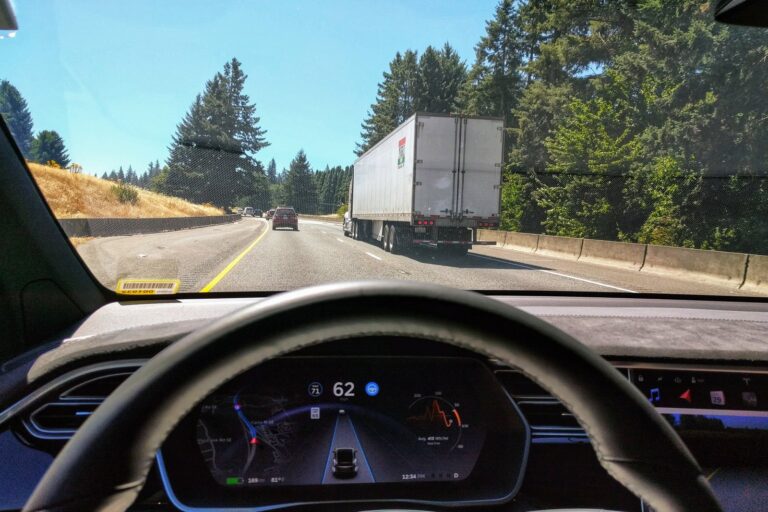
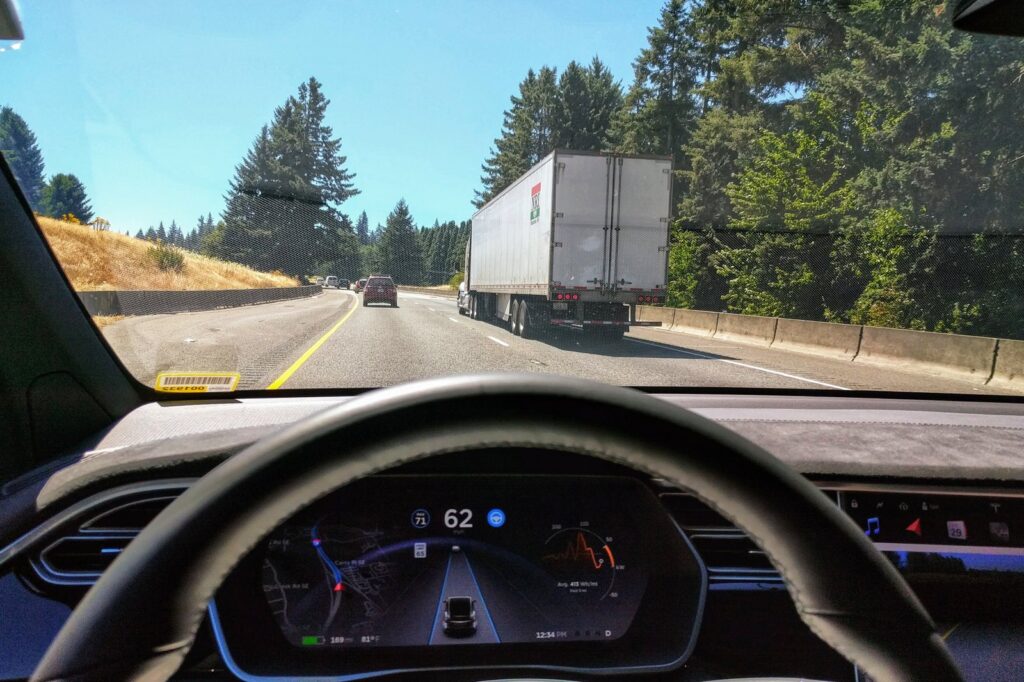
Tesla Autopilot is classified as Level 2 automation, meaning it requires constant human supervision by definition. Authorities warn that despite the name Full Self-Driving, the technology does not relieve drivers of their responsibility to safely operate vehicles. This distinction remains critical for personal protection and safety in everyday driving.
Practical Guidance for Owners
Owners must understand that the system unlatches the Supercharger connector but causes damage if not used correctly during emergencies. The figure that matters is that any misuse leads to substantial costs, reinforcing the need for vigilance when relying on automated features.
Consumers should consult official documentation for specific emergency scenarios before attempting to use advanced functions. The practical takeaway is that while new benchmarks pass, the human element remains the final line of defense in crises involving autonomous driving systems.
Regulatory Milestone for Model Y
In May 2026, the National Highway Traffic Safety Administration (NHTSA) announced that recent Tesla Model Y vehicles are the first cars to pass the agency’s new benchmark for advanced driver assistance systems. The milestone applies to the ADAS suite marketed as “Tesla Assisted Driving” in European markets, confirming that the hardware and software meet updated federal performance standards for partial automation.
NHTSA’s evaluation focused on the system’s ability to execute core Level 2 functions such as automatic emergency braking, adaptive cruise control, and lane centering under the new test protocols. While the clearance validates the technical baseline of the Model Y’s driver-assistance stack, the agency maintains that these systems require constant human supervision and do not constitute autonomous driving.
Accidental Activation During F1 Weekend
Tesla’s newly launched “Emergency Drive Away” function experienced its first real-world activation under unexpected circumstances this past October. A driver in Austin accidentally triggered the feature while charging his vehicle at 6 AM ahead of the city’s Formula 1 Race weekend. Dashcam footage shared online shows the moment the Supercharger connector unlatches and the vehicle begins to move forward, an incident the driver described as a genuine mistake given his exhausted state. Tesla has been clear that this function is intended solely for situations involving an immediate threat to life or safety, or where unplugging would cause unreasonable delay. However, accidental triggers result in significant consequences, as the system is designed to unlatch the connector and drive the vehicle away, causing damage to both the car and the charging infrastructure. The company has stated that repair costs to restore the vehicle and Supercharger to normal operation can reach up to $25,000. Furthermore, if the feature is activated outside of a genuine emergency, the driver assumes full financial responsibility for these repairs.
According to Tesla’s guidelines, reasonable justifications for using Emergency Drive Away are strictly limited to facing an immediate threat to personal safety or avoiding an unreasonable delay caused by unplugging. The driver in Austin did not meet these criteria, as he was simply charging before heading to the race. Following the accidental activation, Tesla requires the owner to schedule a service appointment for a full vehicle inspection. This incident serves as a stark reminder that while the feature offers a potential solution for genuine emergencies, its misuse carries heavy financial penalties and underscores the importance of understanding a system’s intended purpose before activation.
Sources
- Tesla's 'Emergency Drive Away' function gets its first use in the real world
- Tesla Autopilot
- Tesla driver using Full Self-Driving struck and killed a man crossing I-80
Photo: Ian Maddox (CC BY-SA 4.0)