
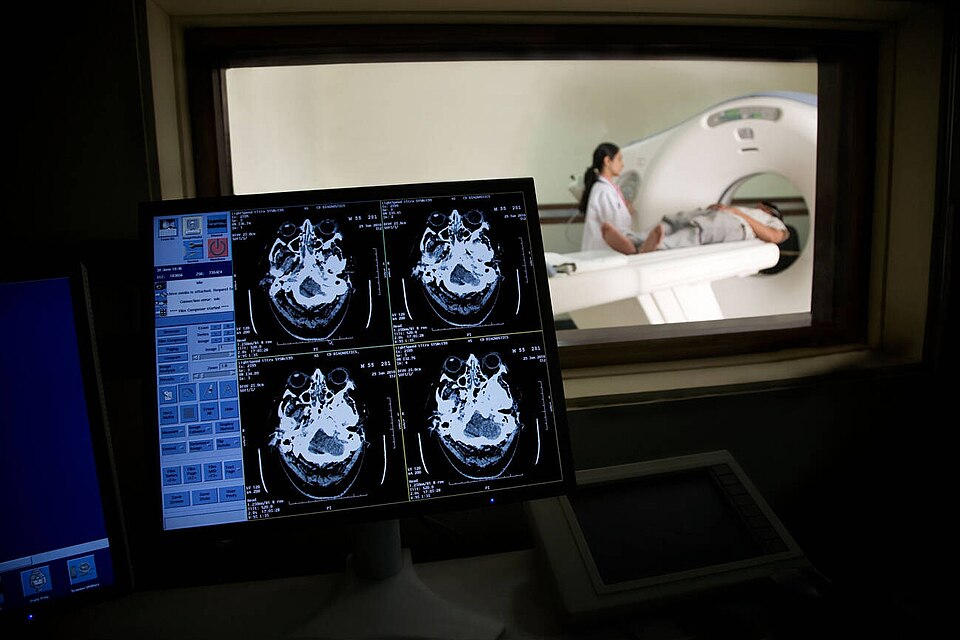
San Francisco, October 1 — A recent study published in the journal Nature Communications has shed light on the physiological changes that occur in the brains of individuals experiencing long COVID, particularly those with persistent fatigue. The research, conducted by scientists at the University of California, San Francisco, found that individuals with long COVID exhibit significantly reduced cerebral blood flow compared to those who have fully recovered from SARS-CoV-2 infection.
The study involved 42 participants diagnosed with long COVID who reported fatigue lasting more than three months post-infection, and 29 healthy controls. Using arterial spin labeling MRI, a non-invasive neuroimaging technique, researchers measured resting cerebral blood flow and observed a global reduction of approximately 10% in the long COVID group. The most pronounced decreases in cerebral blood flow were found in the frontal and parietal lobes, brain regions associated with executive function, attention, and cognitive processing.
A key aspect of the study is that it controlled for variables including age, sex, body mass index, and depression scores, which were not significantly different between groups. This suggests that the observed reduction in cerebral blood flow is not solely due to other underlying factors. The researchers also found that the reduced cerebral blood flow was correlated with fatigue severity, but not with resting heart rate or blood pressure, indicating a potential neurological mechanism rather than a purely cardiovascular one.
The study’s findings contribute to growing evidence that long COVID involves measurable physiological changes in the brain, potentially explaining neurocognitive symptoms such as brain fog and fatigue. Notably, 76% of the long COVID participants met the World Health Organization’s clinical case definition for post-COVID-19 condition, highlighting the significance of this research. The study’s results are encouraging, as they provide insight into the underlying mechanisms of long COVID, which can inform the development of effective treatments.
The encouraging part is that this research can help patients and healthcare providers better understand the complexities of long COVID. Patients should be aware of the potential for persistent fatigue and other neurocognitive symptoms, and talk to their doctor about any concerns they may have. As research continues to uncover the mysteries of long COVID, it is essential to stay informed and seek medical advice from qualified professionals.
Implications and Future Research
The study’s limitations, including its cross-sectional design and relatively small sample size, highlight the need for further research in this area. Additionally, the study did not assess the impact of vaccination status, antiviral treatment, or reinfection on cerebral perfusion, leaving room for future investigation. Despite these limitations, the findings provide valuable insights into the physiological changes that occur in individuals with long COVID, and can inform the development of targeted treatments and interventions.
Conclusion and Next Steps
As the scientific community continues to explore the complexities of long COVID, patients and healthcare providers can look forward to a better understanding of this condition. The study’s findings are a step in the right direction, and future research will likely build upon these results. For now, patients experiencing persistent fatigue or other neurocognitive symptoms should consult their healthcare provider for guidance and support.
Consult your doctor for medical advice.




