
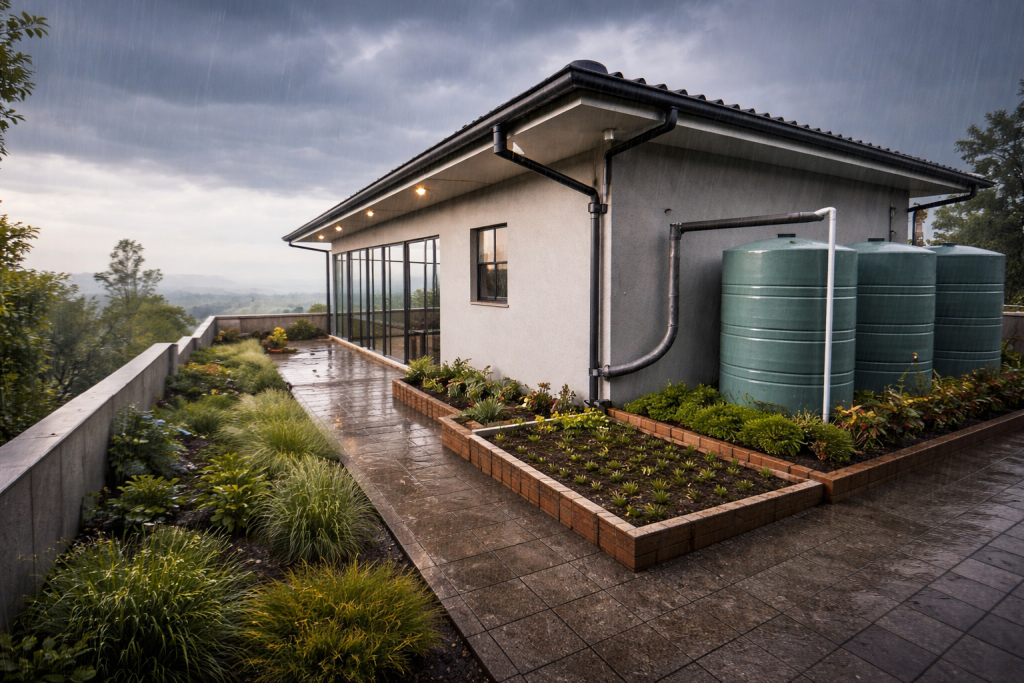
Washington, D.C., September 29 The story begins with a simple rooftop, a few gutters, and a barrel. In homes across the United States, rainwater harvesting systems are quietly transforming how families manage their water use, particularly in the summer months when outdoor irrigation demands peak. According to the U.S. Environmental Protection Agency, outdoor water use accounts for nearly 30% of total household water consumption in the United States, rising to as much as 60% in arid regions during summer months.
This has prompted a growing interest in rainwater harvesting systems, which collect and store runoff from rooftops for non-potable uses such as watering lawns and gardens. At its heart, these systems are designed to be low-cost and effective.
A typical 1,000-square-foot roof can yield approximately 600 gallons of water from just one inch of rainfall, making even modest installations capable of significantly reducing household reliance on municipal water supplies.
How It Works
Installation of a basic system typically involves positioning a storage tank beneath a downspout, using materials such as food-grade plastic drums or barrels, PVC piping, and mesh screens to prevent debris and mosquito breeding. The EPA promotes these systems as part of its WaterSense program, which aims to protect water resources through efficiency and innovation. What unfolded in recent years is a movement toward sustainable landscaping practices that align with the goals of reducing municipal water demand and supporting resilience during drought conditions.
These systems are especially beneficial in regions facing water stress due to climate variability. For those involved, the benefits are clear.
The estimated cost for a basic DIY system ranges from $50 to $150, with many components available at hardware stores or repurposed from recycled containers. Maintenance requirements are minimal, involving periodic cleaning of screens and inspection of fittings.
Looking Ahead
The EPA notes that harvested rainwater is best suited for non-potable uses such as watering lawns, gardens, and washing vehicles, and advises against using it for drinking, cooking, or bathing without proper treatment. Studies cited by the EPA indicate that widespread adoption of rainwater harvesting could reduce municipal water demand, lower energy use associated with water treatment and pumping, and decrease stormwater runoff, which contributes to erosion and pollution in waterways.
Incentives for installation, such as rebates or tax credits, are offered by some local governments and water utilities, though availability varies by jurisdiction. The EPA emphasizes that rainwater harvesting aligns with sustainable landscaping practices and supports resilience during drought conditions, particularly in regions facing water stress due to climate variability.
The agency provides free guides and technical resources through its website to assist homeowners in designing and implementing effective systems. As the United States continues to grapple with water scarcity and climate challenges, the role of rainwater harvesting is likely to grow in importance, offering a practical and accessible solution for households across the country.




