
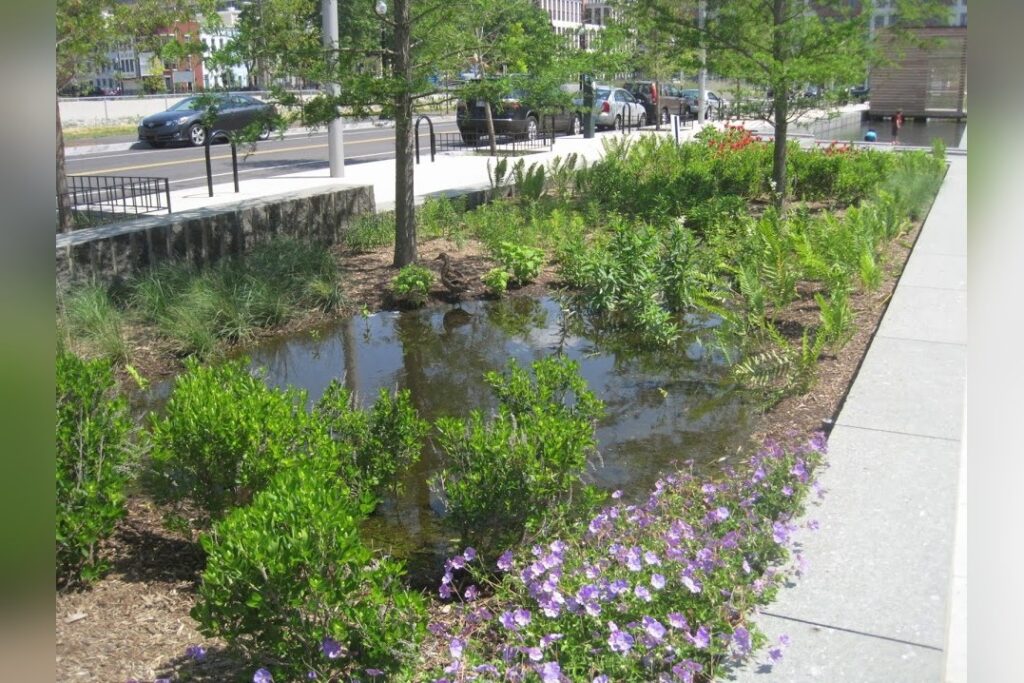
Washington, September 29 — A growing trend in urban sustainability is the adoption of rain gardens, shallow vegetated depressions designed to capture and absorb stormwater runoff from impervious surfaces, reducing pollution entering local waterways and mitigating flooding risks. According to the U.S. Environmental Protection Agency (EPA), a typical residential rain garden can absorb 30 percent more water than a conventional lawn, significantly decreasing runoff volume.
These gardens are planted with native, deep-rooted perennial plants and grasses that thrive in both wet and dry conditions, requiring minimal irrigation once established—often reducing outdoor water use by up to 50 percent compared to traditional landscaping, based on data from the University of Minnesota Extension.
Benefits and Incentives
What unfolded in the 1990s in Maryland as part of the Chesapeake Bay Program’s efforts to reduce nutrient pollution has since spread to all 50 U.S. states as a low-impact development strategy endorsed by the EPA and the American Society of Civil Engineers. Rain gardens provide critical habitat for pollinators such as bees and butterflies, with gardens featuring native flowering plants like coneflower, black-eyed Susan, and milkweed supporting over 100 species of native pollinators.
For those involved in installing rain gardens, the costs vary by size and region, but typically range from $3 to $5 per square foot for DIY projects, with professionally installed systems averaging $10 to $15 per square foot. Many municipalities offer rebates or incentives, such as Portland, Oregon’s Clean River Rewards program, which provides up to $500 in credits for residential rain garden installation, and Montgomery County, Maryland offers rebates of $1 per square foot up to $400.
Proper Installation and Maintenance
Proper siting requires placing the garden at least 10 feet from building foundations to prevent water seepage, in a location that receives runoff from downspouts or paved areas, with a slope of less than 12 percent to avoid erosion. Soil permeability is tested via a percolation test: digging a 6-inch hole, filling it with water, and measuring drainage time; ideal drainage occurs within 24 hours.
The garden should be sized to hold about 1 inch of runoff from the contributing impervious area—calculated by multiplying the roof or driveway area in square feet by 0.083 (to convert inches to feet), then dividing by 7.48 to get gallons, and adjusting for soil type. Maintenance involves annual mulching, weeding, and checking for erosion or clogging; plants may need thinning every 3–5 years.
A sharp rise in the adoption of rain gardens can be seen in urban sustainability initiatives, including Philadelphia’s Green City, Clean Waters program, which aims to install 10,000 acres of green infrastructure by 2036, with rain gardens constituting a significant portion. As the US administration continues to promote environmental stewardship, the practice of installing rain gardens is likely to continue growing, with potential benefits including increased property values of 3–5 percent due to enhanced curb appeal and perceived environmental stewardship.
Looking Forward
As the trend of rain gardens continues to spread, it will be important to watch how municipalities and homeowners work together to implement and maintain these systems, and how the benefits of rain gardens are realized in terms of reduced pollution and mitigated flooding risks. With the EPA and other organizations endorsing rain gardens as a low-impact development strategy, it is likely that we will see a continued growth in the adoption of this practice, and a corresponding decrease in the negative environmental impacts of stormwater runoff.
Sources
More How-To & DIY coverage: Podcast turns true crime real estate horror into safety lessons for realtors




