
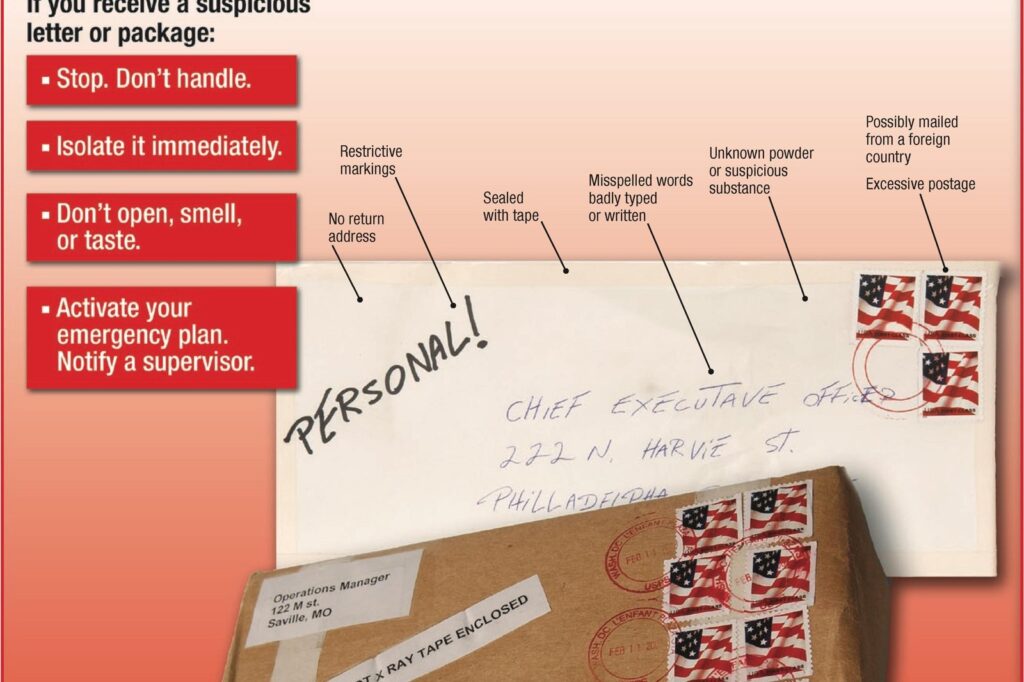
Practical Screening Steps for Home and Small Offices
Individuals and small offices can use simple, low-cost methods to screen incoming mail for potential threats. Wearing disposable gloves when handling envelopes reduces direct contact with unknown substances. Checking for unusual odors, stains, or discoloration on the packaging can signal a problem. A basic ultraviolet (UV) light, available at many hardware stores, may reveal hidden markings or substances not visible under normal light. These steps require no specialized training or expensive equipment.
Why Low-Cost Methods Matter Amid Rising Mail Threats
Recent incidents show that suspicious mailings have reached state election offices and congressional offices nationwide. According to the Senate sergeant-at-arms notice, law enforcement is working to intercept additional letters before delivery, but some may still reach their destinations. This means individuals and small organizations may be the first to encounter a potentially hazardous item. Low-cost screening methods provide an immediate, accessible way to increase vigilance without waiting for professional intervention.
How to Spot Warning Signs Like Discoloration or Powder
The Senate sergeant-at-arms communication advises staff to look for specific indicators when screening mail. These include visible discoloration on the envelope, powder emanating from the package, or postmarks that do not match the return address. An example cited in the notice showed a return address labeled ‘DSA’ with a New York City origin, which did not align with the expected sender. Recognizing these signs early allows individuals to isolate the item and avoid unnecessary exposure.
When to Involve Law Enforcement vs. Handling Internally
If suspicious signs are found, the recommended action is to not handle the letter further and to leave the area where it was discovered. The Senate sergeant-at-arms notice states that all suspicious letters, packages, or substances should be treated as potentially hazardous and handled according to established safety protocols. Law enforcement should be contacted immediately in such cases. Internal handling should be limited to observation and isolation; no attempt should be made to open, smell, or touch the item beyond initial visual screening from a safe distance.
What Experts Recommend for Ongoing Vigilance
Ongoing vigilance includes staying informed about current threats and maintaining consistent screening habits. The National Association of Secretaries of State and the National Association of State Election Directors emphasized that election officials should never fear for their safety while performing their duties, highlighting the importance of preparedness. Regularly reviewing guidance from trusted sources such as the FBI, U.S. Postal Inspection Service, and state police helps individuals and small offices adapt their screening practices as new information emerges. Simple routines, like wearing gloves and checking for anomalies, become more effective when practiced consistently.
Staying Informed About Mail Safety Protocols
To stay updated on the latest mail safety protocols, individuals and small offices can refer to resources provided by the FBI, U.S. Postal Inspection Service, and state police. These organizations regularly release guidance and updates on potential threats and best practices for handling suspicious mail. The National Association of Secretaries of State and the National Association of State Election Directors also offer valuable information and support for election officials and workers.
Additionally, official websites and social media channels of these organizations can serve as reliable sources of information on mail safety protocols. By following these sources and staying informed, individuals and small offices can adapt their screening practices as new information emerges and stay vigilant against potential threats.
Regular review of guidance from trusted sources is crucial in maintaining effective mail screening practices. This includes being aware of the latest indicators of suspicious mail, such as discoloration, powder, or mismatched postmarks and return addresses. By staying informed and up-to-date, individuals and small offices can contribute to a safer and more secure mail handling environment.
Recent Incidents Highlight Ongoing Threat to Election and Congressional Offices
In mid-October 2026, multiple state election offices and congressional offices received suspicious mailings containing unknown substances, including white powder, just weeks before key elections. Louisiana Secretary of State Nancy Landry’s office evacuated a facility after receiving a package with white powder, though testing later found no harmful substances. Ohio Secretary of State Frank LaRose confirmed his office was targeted, but the letter was intercepted by U.S. Postal Service investigators before delivery. Oklahoma also reported receiving a suspicious package, with officials stating election operations remained unaffected.
The incidents occurred on the 25th anniversary of the 2001 anthrax attacks, prompting renewed vigilance. The Senate sergeant-at-arms noted that while law enforcement is working to intercept additional letters, some may still reach their destinations. Targets included offices of Senators Christopher Murphy (D-Conn.), Charles E. Schumer (D-N.Y.), and Alex Padilla (D-Calif.), with Padilla confirming his office was notified by the FBI about a intercepted letter containing a suspicious substance.
Federal agencies, including the FBI and U.S. Postal Inspection Service, are leading the investigation into the mailings, which have been sent to various addresses nationwide. Law enforcement partners are working to identify those responsible, while officials stress that election and congressional staff should never fear for their safety while performing duties. The National Association of Secretaries of State and the National Association of State Election Directors reiterated that threats against election officials have no place in democracy and urged continued coordination with security partners.
Key Details From the October 2026 Mailing Incidents
The suspicious mailings occurred on October 15, 2026, marking the 25th anniversary of the 2001 anthrax attacks. Packages were sent to election offices in Louisiana, Ohio, and Oklahoma, as well as congressional offices in Connecticut, New York, and California. In Louisiana, an employee opened a package containing white powder and was taken to the emergency room as a precaution, though no harmful substances were found. Ohio’s secretary of state confirmed his office was targeted, but the letter was intercepted by U.S. Postal Service investigators before delivery. Oklahoma reported receiving a suspicious package but confirmed election operations were unaffected.
The Senate sergeant-at-arms notice warned that while law enforcement is working to intercept additional letters, some may still reach their destinations. Federal agencies, including the FBI and U.S. Postal Inspection Service, are leading the investigation into the mailings, which have been sent to various addresses nationwide. Law enforcement partners are working to identify those responsible, while officials stress that election and congressional staff should never fear for their safety while performing duties.
Sources
- ‘Suspicious substances’ target senators on anniversary of attack
- Suspicious white powder sent to election offices in 3 states
- Suspicious mailings to election officials, congressional offices under investigation
Photo: US Postal Inspection Service (Public domain)




