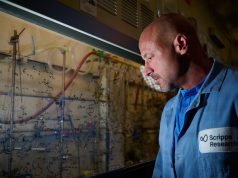
SCRIPPS RESEARCH, LA JOLLA — A single molecule, one building block among thousands, may hold the key to quieting the brain inflammation that drives Alzheimer’s disease. Researchers here have identified a precise chemical change on a protein called STING that turns a normal immune response into a destructive, self-sustaining fire.
The protein STING usually acts as a sentinel. It detects threats like viruses and sounds an alarm. But in Alzheimer’s, something goes wrong. The protein gets chemically modified at a specific spot — an amino acid called cysteine 148. That modification locks STING into a hyperactive state. It keeps pumping out inflammatory signals long after any real threat is gone.
That chronic inflammation destroys the connections between neurons. Those synaptic connections are exactly what patients lose as their cognition declines. The clumps of protein that define Alzheimer’s — amyloid-beta and alpha-synuclein — can trigger this change. They spark a cycle. Inflammation begets more inflammation.
Neurologist Stuart Lipton led the team. They found that blocking this specific modification in mice reduced neuroinflammation significantly. More important, the protection extended to the synapses. Those connections held.
This is a shift in thinking. For years, drug development focused on clearing amyloid plaques. Those trials largely failed. Patients did not get better. The field has been searching for a new target. This work points squarely at inflammation as a driver, not just a side effect.
What makes the finding precise is the target itself. The modification happens on cysteine 148. That is a single point on a large protein. Blocking that one change quiets the harmful overactivation. It leaves the rest of STING’s normal function intact. The immune system can still fight infections. Broad anti-inflammatory drugs cannot do that. They suppress everything, which creates risks.
The researchers are already working on small molecules to block that specific modification. That is not a treatment yet. It is a roadmap. A way to design drugs that hit only the bad signal, not the good one.
Factors that raise nitric oxide in the brain — aging, air pollution, even wildfire smoke — can fuel this process. That means environmental exposures may be feeding the molecular switch. The connection between pollution and dementia has been observed before. This offers a mechanism. A clear chain from smoke to chemical change to immune overdrive.
The work is still preliminary. Mice are not people. A molecule that works in a lab dish or an animal model often fails in humans. But the logic here is tight. A precise switch. A precise blocker. A preserved immune system. That combination has eluded Alzheimer’s research for decades.
Lipton’s team has not announced a timeline for human trials. They are in the early stages of developing compounds. The National Institutes of Health funded the work. Scripps Research holds patents on the technology.
Alzheimer’s affects more than six million Americans. No drug stops or reverses it. The few approved treatments offer modest symptom relief. Families watch their loved ones fade. The need for something real, something that changes the trajectory, is desperate.
This finding does not promise a cure. It offers a target. A specific, druggable point on a single protein. That is more than the field has had for a long time. It is a place to aim.