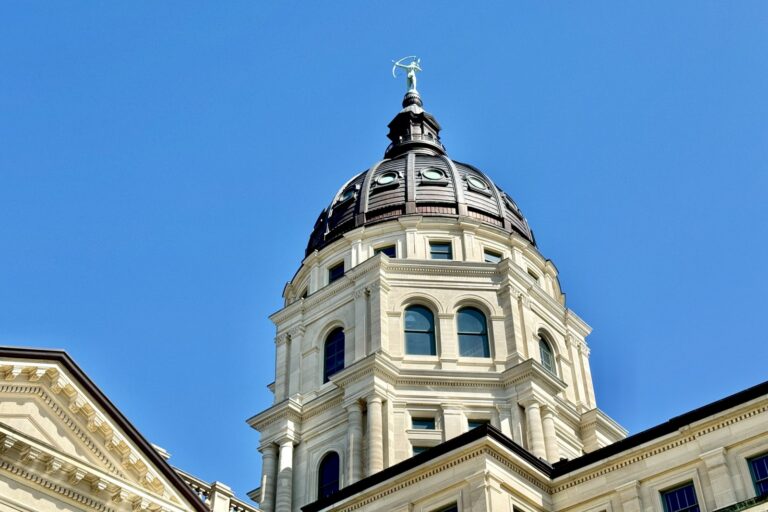
Eight years. That is the line in Estonian law today: a journalist can be forced to name a source only in criminal proceedings over an offence carrying a maximum sentence of at least eight years in prison. A government bill, 1046 SE, would drop that to five.
A lower bar
Here’s what it means in plain terms. Under the proposal, any first-degree offence would be enough to override a reporter’s privilege. Section 4 of the Penal Code defines that as a crime punishable by more than five years’ imprisonment. Think of it like lowering the weight limit on a bridge: far more traffic gets across. The range of cases in which a source can be exposed grows considerably.
The Ministry of Justice and Digital Affairs, headed by Liisa-Ly Pakosta, prepared the bill. It went to the Riigikogu on 12 October and is due to reach Parliament on 18 November. The explanatory memorandum says nothing about the lower threshold. It says “largely the same standard” as the current Code will apply, and even suggests Estonia’s bar sits above the one in the European Media Freedom Act, Regulation (EU) 2024/1083. On the other conditions, that is fair. The evidence must be indispensable, other investigative methods must be unavailable or much harder, and an overriding public interest must exist. On the seriousness of the offence, the simplest test to run, putting the old provision next to the new one is enough to show the claim does not hold.
Who is covered, and what
The bill also does some good. It pulls what the Code of Criminal Procedure will call ametiprivileeg, professional privilege, into a single framework. That is the right of clergy, lawyers, journalists, doctors, notaries and a few other groups to keep back information gained through their work. Until now the right has applied almost entirely to witness testimony. The reform stretches it to documents, digital data, searches and surveillance, with the new rules due to take effect on 1 June 2027.

Protection would reach a journalist’s spouse, partner or anyone in a stable relationship with them, plus colleagues who might learn something confidential on the job. The memorandum has freelancers in mind: for many of them home is the office, and the line between private and professional life blurs. A partner at the kitchen table can easily learn who a source is. Editors and technical staff bound by confidentiality are covered too.
Covert surveillance sees the biggest practical gain. The current Code bars intercepted communications covered by privilege from being used as evidence, but says nothing about other techniques. The Ministry’s own example is blunt: an undercover officer could be sent to a doctor, lawyer or journalist to go through a phone and computer in secret, with no judge involved. Under the bill, the override conditions would apply to every surveillance operation. Protected material picked up by chance would be separated out and kept from official records.
Publishers get safeguards as well. A cloud or hosting provider holding data for a journalist under contract could refuse to hand it over where the law does not allow seizure. During a search of a newsroom, the journalist may be present, or a representative of the publisher can attend and have objections recorded. Anyone targeted can ask that disputed material be sealed unread until the pre-trial judge decides.
The gaps
The privilege is narrow. It covers only information that could identify a source. The memorandum itself cites the European regulation, which also bars states from compelling journalists to give up “confidential communications”. The bill takes on the first protection and leaves the second out. Notes, recordings, drafts and exchanges that do not reveal who spoke remain exposed.
The general exceptions worry critics too. A judge may allow evidence to be collected if a source has waived confidentiality “through their conduct”, a phrase the bill never defines. Another exception applies where the information has stopped being confidential for reasons outside the authorities’ doing, unless journalist and source show they took “all reasonable measures” to protect it. The memorandum’s examples are a document left behind in a café or forwarded to a mailing list by mistake. A third applies when there are reasonable grounds to suspect the journalist of an offence. That one matters most for investigative work, because reporters handling confidential documents can end up under suspicion for how they got them.
Then there is the clock. Seized material stays sealed only if the journalist or source applies to a judge within two working days of learning that the measure has ended. Miss that and the authorities can break the seal. For a small newsroom or a freelancer with no lawyer on call, two days is not much.
Lawyers fare better. A pre-trial judge must always authorise a search of a lawyer’s office, home or car, and a fellow lawyer named by the Bar Association must attend, with the state paying the fees. A lawyer can be made to testify only when suspected of an offence themselves, and the waiver-by-conduct exceptions do not apply. Journalists get no independent observer at searches and no matching exemption in the witness box.
On 8 October Pakosta said that if the state wants to convict someone, it must collect the evidence itself and cannot assume that a story told to a journalist can secure a conviction the next day. The bill applies that principle more firmly to a suspect talking to a lawyer than to a source talking to a reporter.
The timing is awkward. The Riigikogu passed the Crisis Situation and National Defence Act quickly in June, and it came into force on 1 October. On 1 June the Estonian Association of Newsmedia Enterprises wrote to the National Defence Committee that its provisions on limiting the confidentiality of communications had no specific protection for journalistic sources. It added that police, the security services and the armed forces were given power to restrict or ban media services, and that it had been shut out of the drafting. On 19 June the general meeting of the European Federation of Journalists unanimously backed the Estonian Association of Journalists in opposing the legislation.
In civil proceedings, Estonia’s Supreme Court has already treated the protection of journalistic sources as absolute. Criminal cases are where the state has the most intrusive powers, and where this bill weakens the shield.
Sources
- 7 Safest Cars for Older Drivers, Based on IIHS and NHTSA Data – DAX Street
- Estonia
- Estonia Plans 150 Bunkers Along Border With Russia – The Moscow Times
- “Appeasing Dictators Brings Only Humiliation”: Estonia’s PM Rejects Softer Rhetoric Toward Russia
- Don Jr.âs Eyebrow-Raising Secret Dinner Guest List Exposed
- Estoniaâs Professional Privilege Reform: Journalists and Clergy
Photo: Ben Grey (CC BY-SA 2.0)