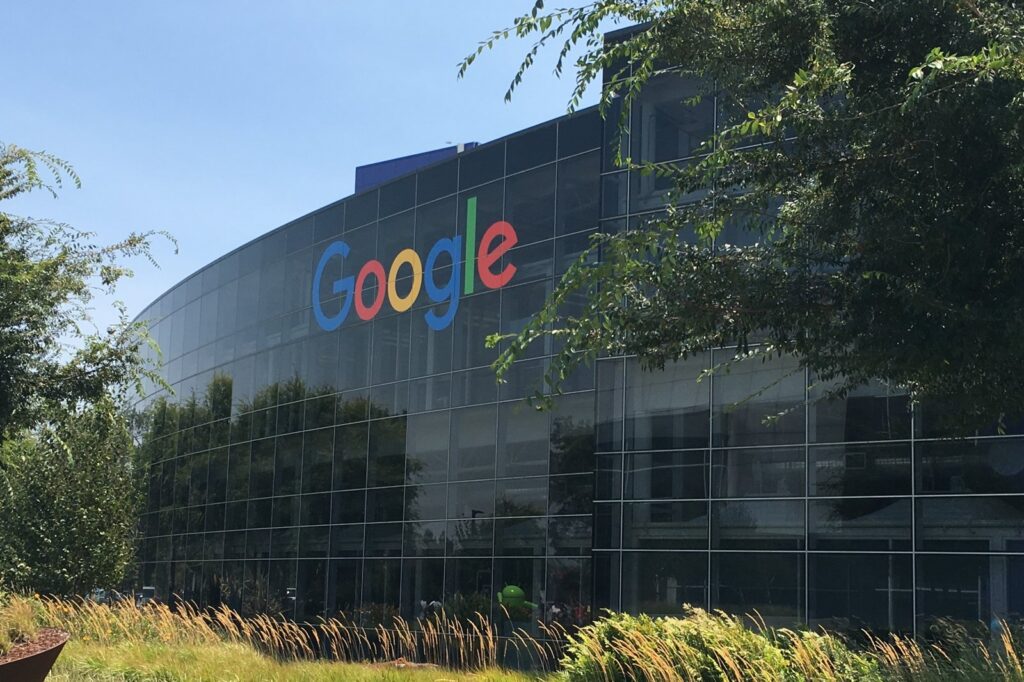
Google announced on Nov. 3 that it plans to make its AI tools unavailable to K-12 students by default unless school administrators explicitly enable them, a policy shift expected to roll out in early 2027. The changes cover Gemini, Gemini Notebook (NotebookLM), Gemini in Classroom, and Google Search.
The Search Trade-Off
The technical reality is starker than the headline control. Schools that completely disable Google’s AI services will also lose Search access for student accounts. Chris Phillips, Google’s vice president of education, told The New York Times that “Search and A.I. are deeply integrated.” Students at schools blocking AI “will not have access to search, and they’ll see a message from their school that indicates it’s not available,” Phillips said.
Google maintains the changes give schools more control rather than less. In a clarification posted on X, the company said administrators could independently enable Gemini, Gemini Notebook, and Search. But the linkage creates a binary choice for districts wary of generative AI: accept the AI stack or lose the search engine millions of students rely on for everyday research.
What Sits Under the Hood
The platform at the centre of this, Gemini Notebook, was rebranded from NotebookLM on July 16, 2026. As of June 2026, it runs on a Gemini 3.5 model. The tool operates as a retrieval-augmented generation system: users upload documents — up to 50 sources of 500,000 words each on the free Standard tier — and the model grounds its answers strictly in that corpus, providing inline citations to the original passages.
The free Standard tier is available with a personal Gmail sign-up or a qualifying Google Workspace license. Paid tiers — Plus, Pro, and Ultra — are not standalone subscriptions; they are tied to Google AI plans or qualifying Workspace licenses. A Standard notebook caps at 50 sources; Plus raises that to 100, Pro to 300, and Ultra to 600.
Textbooks and Study Guides
On Oct. 29, Google added hundreds of free textbooks and educational references to the platform, including titles from OpenStax, Open Textbook Library, and S Chand Publishing. Students can browse and add these books directly inside a notebook. The system then allows them to ask questions about the material and receive answers supported by citations to the original sources.
Beyond Q&A, the platform generates customized study guides, practice quizzes, and flashcards based on textbook content. The Studio panel also produces Audio Overviews — podcast-like discussions between two AI hosts — in four formats and more than 80 languages, plus Video Overviews, slide decks, and infographics.
The Voice in the Machine
The Audio Overviews feature carries a legal backdrop. A California state court upheld claims by radio and podcast host David Greene that Google unlawfully used his voice for the default male voice in NotebookLM’s Audio Overviews. Greene, who hosted NPR’s Morning Edition and the podcast Up First, alleged the male host renders text into speech “calibrated to replicate Mr. Greene’s unique vocal qualities, cadence, tone, pitch, and expressive style.” The court overruled Google’s demurrer to every cause of action — statutory right of publicity, unfair competition, common law right of publicity, and unjust enrichment — though it sustained Alphabet’s demurrer with leave to amend.
Timeline and Next Steps
The policy rollout is expected in early 2027. Beginning then, schools that permit AI will have two Search experiences to choose from: the standard version with AI Overviews and AI chats, or Guided Learning, an AI-powered tutoring experience designed to help students work through complicated questions using guided prompts instead of immediately displaying answers. Guided Learning is already available in Google Classroom globally; a pilot bringing it to Search involving selected US schools began later in November 2026.
Sources
- Gemini Notebook
- How to Use NotebookLM (Gemini Notebook): 2026 Guide
- NotebookLM Pricing: Free, Plus, Pro, Ultra Limits — CASRAI
- Greene v. Google LLC | Loeb & Loeb LLP
- Google expands NotebookLM with free academic books and study resources
- Google Changes AI Access Rules for Schools Ahead of 2027
Photo: Asoundd (CC BY-SA 4.0)